

A commercial kitchen hood is designed to remove smoke, grease-laden vapors, heat, and other cooking emissions from a restaurant. However, an exhaust hood cannot function effectively on its own. Every time air is removed from a commercial kitchen, replacement air must enter the building.
This is where a commercial kitchen make-up air system becomes essential.
A commercial kitchen make-up air system supplies replacement air to compensate for the air removed by kitchen exhaust fans. It helps maintain appropriate building pressure, supports exhaust hood performance, improves employee comfort, and reduces problems associated with inadequate ventilation.
Without properly designed make-up air, a restaurant may experience excessive negative air pressure, doors that are difficult to open, uncomfortable kitchen temperatures, smoke escaping from the hood, and problems with certain fuel-burning appliances.
Whether you are opening a new restaurant, installing additional commercial cooking equipment, or taking over an existing restaurant space, understanding make-up air is an important part of commercial kitchen planning.
In this guide, we will explain what a commercial kitchen make-up air system is, how it works, why restaurants need one, how airflow requirements are determined, and what restaurant owners should know before installing or modifying their ventilation systems.
What Is a Commercial Kitchen Make-Up Air System?
A commercial kitchen make-up air system, sometimes abbreviated as MUA, is a ventilation system designed to introduce replacement air into a building to compensate for air removed by mechanical exhaust systems.
Commercial kitchen exhaust hoods can remove thousands of cubic feet of air every minute. That air must be replaced through a properly designed combination of outdoor air supply, mechanical ventilation, and air transferred from adjacent areas.
A dedicated make-up air unit is one common method of providing this replacement air. It typically draws outdoor air into the building using a supply fan and delivers it through ductwork, diffusers, or another approved air distribution arrangement.
Depending on its design, the unit may also filter, heat, cool, or dehumidify the incoming air.
The make-up air system works alongside other ventilation components, including:
- Commercial kitchen exhaust hoods
- Grease filters and collection systems
- Exhaust ductwork
- Roof-mounted or wall-mounted exhaust fans
- Heating, ventilation, and air conditioning systems
- Supply air diffusers
- Ventilation controls
- Fire-suppression system controls, where applicable
These components must work together as part of a coordinated mechanical system.
For a complete explanation of the other components, read our guide on What Are the Different Parts of a Commercial Kitchen Hood?
Why Does a Commercial Kitchen Need Make-Up Air?
To understand why make-up air is necessary, imagine a restaurant kitchen operating several large exhaust fans throughout the day.
As the exhaust fans remove air from the building, the amount of air inside the building must be replenished. If insufficient replacement air is provided, the pressure inside the building may become lower than the pressure outdoors.
This pressure difference can cause air to enter through unintended openings, including gaps around doors, windows, loading entrances, and other parts of the building.
The result may be an uncomfortable and inefficient restaurant environment.
1. Helps Maintain Proper Building Air Pressure
A major purpose of make-up air is to help maintain appropriate pressure relationships throughout the restaurant.
Commercial kitchens are often designed to operate at a slightly negative pressure relative to adjacent dining areas. This encourages air to move toward the kitchen rather than allowing cooking odors and contaminants to spread into customer areas.
However, excessive negative pressure can create operational and safety problems.
A properly designed make-up air system helps maintain the intended pressure relationship without allowing the exhaust system to create excessive negative pressure throughout the building.
2. Supports Commercial Exhaust Hood Performance
Restaurant exhaust hoods rely on appropriate airflow to capture and contain cooking emissions.
When insufficient replacement air is available, the exhaust fan may not operate at its intended airflow. Uncontrolled air entering through doors and other openings may also create cross-drafts that interfere with the hood's ability to capture smoke and grease.
This is particularly important when operating high-output cooking appliances such as commercial charbroilers, deep fryers, and stock pot ranges.
Make-up air must be supplied in a manner that supports hood performance rather than disrupting it.
For additional information, read How Does a Restaurant Hood Remove Smoke and Grease?
3. Improves Employee Comfort
Commercial kitchens already generate substantial heat from cooking appliances, ovens, hot food holding equipment, and refrigeration systems.
If replacement air enters the building without proper temperature control, employees may experience uncomfortable drafts or extreme temperature variations.
During winter, uncontrolled outdoor air can make certain areas of the kitchen unusually cold. During summer, hot and humid outdoor air can increase the burden on the restaurant's air conditioning system.
A properly designed system can help manage these conditions by controlling where replacement air enters and, when necessary, conditioning that air before it reaches the occupied space.
4. Helps Protect Combustion Appliance Operation
Excessive negative pressure can interfere with the operation of certain fuel-burning appliances, particularly equipment that relies on natural draft to vent combustion products.
Under some conditions, pressure imbalances can contribute to backdrafting, where combustion products enter the occupied space instead of being safely discharged outdoors.
This can create serious safety hazards, including potential carbon monoxide exposure.
Make-up air is not a substitute for proper appliance venting, combustion-air provisions, or required safety controls. The complete mechanical and fuel-gas installation must be evaluated by qualified professionals.
5. Helps Control Unwanted Cooking Odors
Air pressure influences how odors travel throughout a restaurant.
If the kitchen is improperly pressurized relative to the dining room, cooking odors and airborne contaminants may move into customer areas or adjacent spaces.
A balanced ventilation system helps establish the intended direction of airflow while the exhaust hood captures cooking emissions near their source.
Make-up air does not remove grease or odors by itself. Its purpose is to support the overall ventilation system that performs those functions.
How Does a Commercial Kitchen Make-Up Air System Work?
Although commercial make-up air systems vary in size and configuration, a typical dedicated mechanical system operates through several stages.
Step 1: The Kitchen Exhaust System Removes Air
When the restaurant's exhaust hood operates, its fan draws air through the hood filters and exhaust ductwork before discharging it outdoors.
This removes air containing cooking heat, smoke, grease-laden vapors, and other emissions captured by the hood.
The exhaust volume is generally measured in cubic feet per minute, commonly abbreviated as CFM.
Step 2: The Make-Up Air System Starts
A mechanical make-up air system is normally coordinated with the operation of the kitchen exhaust system.
Applicable mechanical codes commonly require the mechanical replacement-air system to operate whenever the associated commercial kitchen exhaust system is running.
This coordination helps prevent the exhaust fan from operating without its intended replacement-air supply.
Step 3: Outdoor Air Enters the Make-Up Air Unit
A dedicated make-up air unit draws outdoor air through an appropriately located intake opening.
The intake must be positioned in accordance with applicable requirements to reduce the risk of drawing exhaust emissions, vehicle fumes, or other contaminants back into the building.
Depending on the equipment, the incoming air may pass through filters that remove dust and other airborne particles.
Step 4: The Air Is Conditioned When Required
Some make-up air units deliver outdoor air without actively heating or cooling it.
Other systems include heating, cooling, or humidity-control components that help prepare the outdoor air before it enters the restaurant.
The required conditioning depends on the local climate, building design, applicable energy and mechanical codes, and the capabilities of the restaurant's existing HVAC system.
Step 5: Replacement Air Is Distributed Throughout the Kitchen
The supply fan moves air into the building through ductwork, ceiling diffusers, wall-mounted air outlets, hood-integrated supply plenums, or other approved distribution methods.
Correct distribution is extremely important.
Air supplied at excessive velocity or directed toward the cooking surface can disturb the rising thermal plume from cooking appliances and interfere with hood capture.
Step 6: The Ventilation System Maintains Its Intended Air Balance
The exhaust system continues removing air while the make-up air system and other ventilation sources provide replacement air.
When the systems are correctly designed, installed, and balanced, they help maintain the desired pressure relationships and ventilation performance throughout the building.
What Are the Main Parts of a Commercial Make-Up Air Unit?
A dedicated commercial make-up air unit typically contains several components that control how outdoor air enters and moves through the building.
| Component | Primary Function |
|---|---|
| Outdoor air intake | Allows replacement air to enter the system |
| Air filters | Remove certain airborne particles from incoming air |
| Supply fan | Moves replacement air into the building |
| Motor and fan controls | Operate the fan and regulate airflow where supported |
| Heating section | Warms incoming outdoor air when required |
| Cooling section | Cools incoming outdoor air when the unit includes cooling capability |
| Motorized dampers | Control or isolate airflow according to system design |
| Ductwork and diffusers | Distribute replacement air to the intended areas |
| Temperature and pressure sensors | Provide information used by ventilation controls |
| Control panel | Coordinates operation with exhaust equipment and other system components |
Not every commercial make-up air unit includes all of these components.
A basic supply fan may deliver filtered, unconditioned outdoor air, while a more advanced packaged unit may provide heating, cooling, variable airflow, and integration with a building management system.
What Is Negative Air Pressure in a Restaurant?
Negative air pressure occurs when the pressure inside a particular space is lower than the pressure in a surrounding space.
In a restaurant, mechanical exhaust fans can create negative pressure by removing air from the building faster than controlled replacement air is supplied.
A small amount of negative pressure within the kitchen relative to the dining room may be desirable. Excessive negative pressure, however, can cause problems.
Signs of Excessive Negative Pressure
- Entrance doors become unusually difficult to open when the exhaust hood is operating.
- Outdoor air rushes into the building when doors open.
- Doors slam shut or produce noticeable whistling sounds.
- Employees experience strong drafts near entrances or service doors.
- Smoke escapes from the hood despite the exhaust fan operating.
- Kitchen temperatures become difficult to control.
- Cooking odors move into unintended areas.
- Certain combustion appliances experience venting problems.
These symptoms may indicate inadequate make-up air, but they can also result from other ventilation, building, or equipment problems.
A qualified mechanical contractor should measure airflow and building pressure before determining the cause.
Can a Commercial Kitchen Have Too Much Make-Up Air?
Yes. Supplying excessive replacement air or delivering it in an inappropriate location can create problems of its own.
For example, too much supply air may cause the kitchen to become positively pressurized relative to the dining room.
This can encourage cooking odors to move into customer areas.
High-velocity make-up air directed across the cooking line can also push cooking emissions away from the hood's capture area.
The objective is not simply to supply as much outdoor air as possible. The objective is to provide the correct amount of replacement air and distribute it appropriately.
What Is the Difference Between Exhaust Air and Make-Up Air?
Exhaust air and make-up air perform opposite but complementary functions in a commercial kitchen ventilation system.
| Feature | Exhaust Air | Make-Up Air |
|---|---|---|
| Direction of airflow | Out of the building | Into the building or kitchen |
| Primary purpose | Remove cooking emissions and contaminated air | Replace air removed by exhaust systems |
| Typical equipment | Exhaust hood, ductwork, exhaust fan | Supply fan, make-up air unit, supply ductwork |
| Temperature control | Removes air already present in the kitchen | May supply heated, cooled, or unconditioned air |
| Effect on pressure | Generally reduces pressure within the space | Helps offset pressure reduction caused by exhaust |
| Airflow measurement | CFM | CFM |
A properly functioning commercial kitchen requires coordination between both functions.
Installing a larger exhaust fan without reviewing the replacement-air system may create additional pressure and ventilation problems.
What Is CFM on a Commercial Kitchen Make-Up Air System?
CFM stands for cubic feet per minute. It is a measurement of how much air moves through a ventilation system during one minute.
Both commercial kitchen exhaust systems and make-up air systems are commonly rated using CFM.
For example, an exhaust system operating at 4,000 CFM removes approximately 4,000 cubic feet of air from the building every minute under its intended operating conditions.
The building must receive a corresponding supply of replacement air through its designed ventilation sources.
However, this does not necessarily mean that the dedicated make-up air unit must independently supply all 4,000 CFM.
Some replacement air may be provided through other properly designed outdoor air and transfer-air systems.
Example of a Commercial Kitchen Air Balance
Consider a hypothetical restaurant with a kitchen exhaust system operating at 4,000 CFM.
| Airflow Source | Illustrative Airflow |
|---|---|
| Kitchen exhaust hood | 4,000 CFM exhausted |
| Dedicated make-up air unit | 3,200 CFM supplied |
| Approved transfer air from an adjacent area | 800 CFM supplied to the kitchen |
| Total replacement airflow entering the kitchen | 4,000 CFM |
In this simplified example, the dedicated make-up air unit supplies most of the required airflow, while the remainder enters from an adjacent area.
The building's outdoor-air system must also account for the air transferred from that adjacent space. Transfer air cannot replace building exhaust unless that air is ultimately replenished from an appropriate outdoor-air source.
This example illustrates the arithmetic of airflow balance only. It is not a recommended design ratio or a complete restaurant ventilation calculation.
Actual system design must account for the intended pressure differential, other building exhaust systems, HVAC operating modes, required ventilation rates, hood specifications, and applicable codes.
How Much Make-Up Air Does a Commercial Kitchen Need?
The required make-up air volume depends on the complete restaurant ventilation design.
There is no universal make-up air requirement that applies to every restaurant, and a system should not be sized based solely on the square footage of the kitchen.
Important factors include:
- The total exhaust airflow of all commercial kitchen hoods
- The type and duty classification of cooking appliances
- The hood's design, listing, dimensions, and installation position
- Other mechanical exhaust systems within the building
- Available outdoor air supplied by existing HVAC equipment
- Approved transfer air from adjacent areas
- Building pressure requirements
- Outdoor air temperature and humidity
- Ductwork design and system resistance
- Applicable mechanical, energy, and building codes
Section 508 of the International Mechanical Code addresses commercial kitchen make-up air and calls for replacement air from all sources to approximately balance the building's total exhaust airflow.
The code also requires make-up air to be supplied without reducing exhaust system effectiveness.
State and local jurisdictions may adopt different code editions or amendments, so the exact requirements must be confirmed for the restaurant's location.
For additional information about the relationship between cooking equipment and ventilation capacity, read our article on How Big of a Commercial Kitchen Hood Do You Need?
What Is the Difference Between Tempered and Untempered Make-Up Air?
Commercial make-up air systems can be designed to provide either tempered or untempered replacement air.
The difference relates to whether the incoming outdoor air is actively conditioned before being introduced into the building.
Untempered Make-Up Air
Untempered make-up air is outdoor air supplied without active heating or cooling by the make-up air unit itself.
The system may still include air filters, fans, dampers, ductwork, and other airflow-control components.
Untempered systems may have lower initial equipment costs than more advanced conditioned-air systems.
However, their suitability depends on local climate conditions, building design, applicable codes, and whether other HVAC equipment can manage the additional heating and cooling loads.
During a cold New Jersey winter, for example, supplying large volumes of unconditioned outdoor air directly into an occupied commercial kitchen could create significant comfort and heating challenges.
Tempered Make-Up Air
Tempered make-up air is replacement air that has been thermally conditioned before entering the occupied space.
Depending on the equipment, tempering may involve heating, cooling, or additional humidity management.
Common heating and cooling arrangements include:
- Direct gas-fired heating
- Indirect gas-fired heating
- Electric heating
- Hot-water heating coils
- Packaged refrigeration-based cooling
- Chilled-water cooling systems
The appropriate configuration depends on the building's utilities, outdoor climate, ventilation design, and applicable regulations.
Tempered make-up air can help maintain more comfortable indoor conditions, but it may also increase equipment costs and utility requirements.
Tempered vs. Untempered Make-Up Air Comparison
| Feature | Tempered Make-Up Air | Untempered Make-Up Air |
|---|---|---|
| Incoming air | Thermally conditioned as designed | Generally enters at outdoor temperature |
| Equipment complexity | May include heating or cooling components | Typically simpler |
| Employee comfort | Can help control uncomfortable temperatures | Depends heavily on climate and other HVAC systems |
| Initial equipment cost | Generally higher for comparable airflow | Generally lower for comparable airflow |
| Utility consumption | Includes energy required for conditioning | May shift heating or cooling demand to other systems |
| Installation suitability | Based on climate, codes, and building design | Based on climate, codes, and available HVAC capacity |
An untempered make-up air unit is not necessarily the less expensive option over the entire life of the system. The restaurant's other heating and cooling equipment may need to compensate for the unconditioned outdoor air.
What Is the Difference Between Direct-Fired and Indirect-Fired Make-Up Air?
Commercial make-up air units equipped with gas heating may use either direct-fired or indirect-fired heating arrangements.
Direct-Fired Make-Up Air Units
In a direct-fired make-up air unit, the incoming air passes through the heating section and is heated directly by an approved gas burner.
The combustion products from the heating process enter the delivered air stream as part of the equipment's designed operation.
These units are specifically engineered and listed for their intended ventilation applications. They must satisfy applicable requirements involving combustion, burner operation, airflow, and safety controls.
Indirect-Fired Make-Up Air Units
Indirect-fired equipment uses a heat exchanger to transfer heat from the combustion process to the incoming supply air.
Combustion products are separated from the supply air and discharged through an appropriate venting arrangement.
Indirect-fired systems may be selected where the application requires separation between the combustion products and the delivered replacement air.
Both types require appropriate installation, servicing, and compliance with manufacturer instructions and applicable codes.
What Is the Difference Between a Make-Up Air System and HVAC?
Restaurant owners sometimes assume that their central air conditioning system automatically provides all the replacement air required by a commercial exhaust hood.
However, make-up air and conventional space-conditioning systems serve different primary functions.
A typical commercial HVAC system may recirculate indoor air while introducing a specified amount of outdoor ventilation air.
A dedicated make-up air system primarily addresses replacement-air requirements created by exhaust operations.
| Feature | Make-Up Air System | Conventional HVAC System |
|---|---|---|
| Primary purpose | Provide replacement air for exhaust | Maintain indoor comfort and ventilation |
| Air source | Typically outdoor air | May combine outdoor air and recirculated indoor air |
| Heating and cooling | Depends on system configuration | Generally a primary system function |
| Operation | Coordinated with exhaust and building requirements | Controlled by temperature, occupancy, and ventilation requirements |
In some restaurant designs, HVAC equipment can supply part or all of the required replacement air when it is specifically designed and controlled for that purpose.
However, air conditioning capacity measured in tons does not automatically establish the amount of outdoor replacement air available.
A restaurant may have a large air conditioning system while still experiencing inadequate make-up air.
Where Is Make-Up Air Supplied in a Commercial Kitchen?
Replacement-air distribution is an important part of ventilation performance.
Several supply methods may be used depending on the kitchen layout and hood design.
Ceiling Supply Diffusers
Replacement air may be distributed through appropriately selected ceiling diffusers positioned within the commercial kitchen.
The diffuser design, location, and air velocity must be considered carefully to avoid directing disruptive air currents toward the cooking equipment or exhaust hood.
Low-Velocity Displacement Ventilation
Some ventilation designs introduce replacement air at relatively low velocities through specifically designed outlets.
This approach can help minimize disruptive cross-drafts near the cooking line when properly engineered.
Hood-Integrated Supply Plenums
Certain commercial hood systems feature integrated supply arrangements that introduce replacement air near the hood.
Depending on the hood's design, these may include front-face, perimeter, back-wall, or other supply configurations.
Hood-integrated supply systems must operate within the manufacturer's tested and approved airflow conditions.
Introducing excessive air directly into or around the hood can interfere with its ability to capture cooking emissions.
Transfer Air From Adjacent Spaces
Some replacement air may be supplied indirectly by allowing appropriately conditioned air to move from an adjacent dining or service area into the kitchen.
This can help make use of outdoor ventilation air already supplied elsewhere in the building.
However, the building-wide outdoor air balance and applicable restrictions on transferring air between different spaces must still be considered.
For additional information about hood configurations, read Wall Canopy Hood vs. Island Hood: What's the Difference?
What Restaurant Equipment Affects Make-Up Air Requirements?
Cooking equipment influences the type and capacity of the commercial exhaust system, which in turn affects the amount of replacement air the restaurant needs.
Different appliances produce different levels of heat, smoke, moisture, grease-laden vapors, and combustion emissions.
Commercial Charbroilers
Commercial charbroilers are commonly used in steakhouses, burger restaurants, Mediterranean restaurants, and other kitchens preparing grilled meats and vegetables.
When grease and food drippings contact hot cooking surfaces, charbroilers can produce substantial cooking emissions.
For example, the Atosa ATRC-36 36-Inch Radiant Broiler and Dukers DCRB36 36-Inch Commercial Charbroiler are examples of equipment that must be considered carefully when planning commercial kitchen ventilation.
Explore our commercial charbroiler collection to compare equipment sizes and configurations.
Commercial Deep Fryers
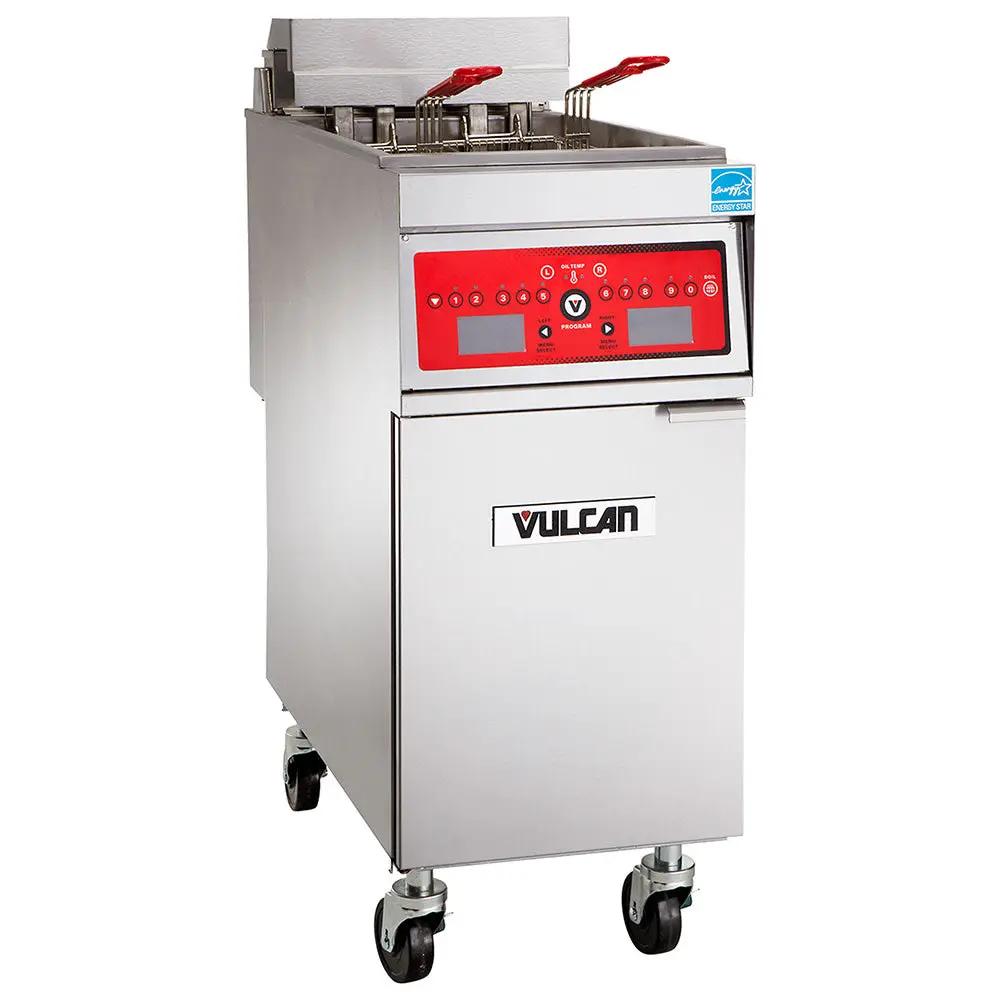
Commercial fryers generate heat and grease-related cooking emissions as they operate.
Restaurants using multiple fryers must account for the entire frying station when evaluating hood coverage and exhaust capacity.
For example, the Dukers DCF4 50 lb Commercial Gas Floor Fryer has a relatively narrow cabinet but substantial rated burner input.
Physical equipment width alone does not establish the ventilation requirements.
Browse our commercial deep fryer selection for additional equipment options.
Commercial Gas Ranges and Griddles
Gas ranges and griddles are frequently the center of a restaurant's cooking line.
The amount and type of cooking emissions depend on burner usage, surface temperatures, cooking methods, food products, and equipment design.
Examples include the Atosa AGR-36G 36-Inch Gas Range with Griddle and the Dukers DCR36-4B12GM 36-Inch Commercial Range.
Restaurants planning a new cook line should compare the complete equipment specifications within our commercial gas range collection.
Commercial Stock Pot Ranges
Stock pot ranges are commonly used for preparing large quantities of soups, sauces, stocks, curries, and other menu items.
These appliances can generate considerable heat and steam during extended cooking periods.
Models such as the Atosa ATSP-18-1 Single Stock Pot Stove and Atosa ATSP-18-2L Double Stock Pot Stove should be incorporated into the restaurant's overall ventilation evaluation.
Explore more models in our commercial stock pot range collection.
Commercial Tandoor Ovens
Commercial tandoors operate at high temperatures and are frequently used for preparing naan, kebabs, roasted meats, and other foods.
When planning an Indian or South Asian restaurant, the tandoor's installation requirements must be considered alongside the other cooking appliances.
For example, the Shaan 30-Inch Commercial Gas Tandoor is an example of specialty cooking equipment that should be included in the complete kitchen ventilation design.
Restaurants can compare different models in our Shaan commercial tandoor collection and read our guide on How Much Space Does a Commercial Tandoor Need?
Important: An appliance's BTU rating is useful for equipment and mechanical planning, but there is no universal formula that converts a cooking appliance's BTU rating directly into its required make-up air CFM.
Do Electric Commercial Cooking Appliances Need Make-Up Air?
Potentially, yes.
Make-up air requirements are primarily associated with the operation of exhaust systems, not simply whether cooking equipment uses gas or electricity.
Electric fryers, electric griddles, and other electric cooking appliances can still produce grease-laden vapors, smoke, steam, and heat.
If an electric appliance requires installation beneath a mechanical exhaust hood, the ventilation design must account for the replacement air associated with that exhaust system.
Switching from gas equipment to electric equipment does not automatically eliminate commercial kitchen hood or make-up air requirements.
The applicable equipment listing, cooking process, manufacturer instructions, and local codes determine the appropriate ventilation arrangement.
For additional information, read our article on Does Every Restaurant Need a Commercial Kitchen Hood?
Do Type I and Type II Hoods Both Need Make-Up Air?
Both Type I and Type II commercial kitchen exhaust systems remove air from the building.
Type I hoods are generally used for cooking processes that produce grease-laden vapors or smoke.
Type II hoods are generally used for applicable processes producing heat, steam, or moisture without grease-laden cooking emissions requiring Type I protection.
If either system mechanically exhausts air from the building, the building's ventilation design must account for the air being removed.
The amount and distribution of replacement air depend on the particular exhaust system and applicable requirements.
Restaurants should not assume that a Type II hood requires no replacement air simply because it is not designed to handle grease-laden vapors.
Warewashing areas may also need to be considered. Read our guide on Does a Commercial Dishwasher Need a Hood?
Can You Add More Cooking Equipment Without Upgrading Make-Up Air?
Sometimes, but the complete ventilation system must be evaluated before additional equipment is installed.
For example, a restaurant may have an existing exhaust hood covering a gas range and a commercial fryer.
If the restaurant wants to add a charbroiler beneath the same hood, the new appliance may change the cooking duty classification, exhaust airflow requirement, hood capture performance, or fire-suppression arrangement.
If the required exhaust airflow increases, the replacement-air system may also need to be modified.
Even if the new appliance physically fits beneath the existing hood, that does not establish that the ventilation system can safely accommodate it.
Before making changes, have qualified professionals evaluate:
- The existing hood's listing and rated performance
- The proposed cooking equipment
- Exhaust fan airflow and operating conditions
- Existing exhaust ductwork
- Make-up air capacity and distribution
- Fire-suppression system coverage
- Gas and electrical infrastructure
- Applicable permit and inspection requirements
For more information, read Can You Add More Equipment Under an Existing Restaurant Hood? and How Do You Know if Restaurant Equipment Will Fit Under Your Hood?
Can You Reuse an Existing Restaurant Make-Up Air System?
Purchasing or leasing a previously occupied restaurant space can provide an advantage when existing commercial ventilation infrastructure is present.
However, the presence of a make-up air unit does not guarantee that it is functional, properly sized, or suitable for the new restaurant's cooking equipment.
Before relying on an existing system, arrange an appropriate inspection.
Important items to verify include:
- The existing make-up air unit's rated airflow
- Actual measured replacement airflow
- Equipment condition and maintenance history
- The condition of filters, dampers, and supply components
- Heating and cooling capabilities
- Coordination with the exhaust fans
- Existing electrical and gas connections
- Compatibility with the proposed cooking line
- Current permit and inspection requirements
For example, a restaurant previously operating primarily as a sandwich shop may have different ventilation needs from a new steakhouse, fried chicken restaurant, or Indian restaurant occupying the same location.
Review the intended menu and equipment list before deciding whether the existing mechanical systems can be reused.
Our article on Can You Reuse an Existing Hood When Taking Over a Restaurant? explains this process in greater detail.
What Is Demand-Controlled Kitchen Ventilation?
Demand-controlled kitchen ventilation, commonly abbreviated as DCKV, is a system that can adjust ventilation airflow in response to cooking activity.
Traditional ventilation systems may operate at a fixed airflow whenever the exhaust hood is running, regardless of whether every cooking appliance is being used.
Demand-controlled systems may use temperature sensors, optical sensors, appliance signals, or other approved control methods to adjust fan operation according to the ventilation demand.
Variable-speed fans can allow the system to increase airflow during heavy cooking and reduce airflow during approved low-demand operating periods.
When exhaust airflow changes, the replacement-air supply must also be coordinated to maintain the intended air balance.
Potential advantages include:
- Reduced exhaust and supply fan electricity consumption during lower-demand periods
- Reduced unnecessary removal of conditioned indoor air
- Lower replacement-air heating and cooling requirements
- Improved coordination between cooking activity and ventilation operation
Actual energy savings depend on the system design, cooking schedules, minimum allowable airflow, control configuration, climate, and operating conditions.
Restaurants should not manually reduce exhaust fan speeds or disable make-up air equipment to imitate a demand-controlled system. These systems must be designed to maintain required ventilation, capture performance, and safety functions throughout their operating range.
What Happens if a Commercial Kitchen Make-Up Air System Stops Working?
A malfunctioning make-up air system can affect several aspects of restaurant operation.
Depending on the equipment and building design, common symptoms may include:
| Symptom | Possible Ventilation-Related Cause |
|---|---|
| Doors become difficult to open | Excessive negative building pressure |
| Smoke escapes from beneath the hood | Insufficient or poorly distributed replacement air, among other possible causes |
| Kitchen becomes unusually hot | Ventilation imbalance or inadequate conditioning |
| Cold drafts appear near entrances | Uncontrolled outdoor air infiltration |
| Cooking odors spread into customer areas | Improper pressure relationships or inadequate hood capture |
| Make-up air fan does not operate | Potential control, electrical, motor, or mechanical fault |
| Fuel-burning appliances experience venting problems | Potential pressure imbalance or other combustion and venting faults |
These symptoms are not definitive diagnoses. Similar problems can be caused by exhaust fan faults, dirty hood filters, ductwork problems, HVAC changes, or other building conditions.
If a make-up air system fails, restaurant operators should follow the equipment's approved operating and shutdown procedures and arrange qualified service.
Do not bypass ventilation interlocks or continue operating cooking equipment when required ventilation is unavailable.
If a carbon monoxide alarm activates or dangerous combustion conditions are suspected, evacuate the affected area and contact emergency services from a safe location.
How Do You Maintain a Commercial Kitchen Make-Up Air System?
Regular maintenance is necessary to ensure that a make-up air system continues providing its intended airflow.
Maintenance frequency depends on the equipment manufacturer, operating hours, outdoor conditions, and the restaurant's ventilation design.
Inspect and Replace Air Filters
Outdoor air filters can accumulate dust, pollen, and other airborne particles.
Dirty filters can increase airflow resistance and potentially reduce the replacement air delivered to the building.
Inspect and replace or clean filters according to the manufacturer's recommended procedure.
Keep Outdoor Air Intakes Unobstructed
Outdoor air intake openings should remain free of leaves, debris, snow accumulation, and other obstructions.
Restricted intake openings can interfere with the unit's ability to provide replacement air.
Inspect Supply Fans and Motor Components
Supply fans, motors, belts where applicable, and associated mechanical components should be inspected according to the manufacturer's service schedule.
Unusual sounds, vibration, or airflow changes may indicate that servicing is necessary.
Maintain Heating and Cooling Components
Make-up air units equipped with gas heating, electric heating, or cooling systems require additional maintenance.
These components should be serviced by appropriately qualified technicians.
Check Ventilation Controls and Interlocks
The make-up air system must remain coordinated with the associated exhaust equipment.
Professional service should include verification that controls, sensors, dampers, and required interlocks operate as intended.
Arrange Periodic Airflow Verification
Over time, filter changes, fan adjustments, equipment modifications, ductwork changes, and other factors can affect ventilation performance.
Professional airflow testing and balancing can help confirm whether the system continues operating according to its approved design.
How Much Does a Commercial Kitchen Make-Up Air System Cost?
The cost of a commercial kitchen make-up air system varies substantially depending on its required airflow, equipment configuration, installation location, and building infrastructure.
Major cost factors include:
- Required replacement-air volume in CFM
- Tempered or untempered equipment configuration
- Heating and cooling capacity
- Gas or electrical infrastructure
- Roof-mounted or indoor installation requirements
- Structural support and roof penetrations
- Supply ductwork and air distribution components
- Ventilation control systems
- Engineering and mechanical design
- Permits and inspections
- Professional installation and commissioning
A restaurant owner should distinguish between the purchase price of the make-up air unit and the total installed cost of the complete replacement-air system.
A lower-priced unit may still require considerable installation work, ductwork modifications, utility upgrades, and additional HVAC capacity.
For restaurants taking over existing buildings, the cost of inspecting, repairing, or modifying an existing system should be compared with the cost of installing a new system.
The most reliable approach is to obtain a project-specific proposal based on the restaurant's intended cooking equipment and approved mechanical design.
What Should You Check Before Installing a Commercial Make-Up Air System?
Make-up air should be considered early in restaurant kitchen planning rather than treated as an accessory that can be added after the cooking equipment is installed.
Before purchasing or installing equipment, confirm the following items with your restaurant design team, mechanical engineer, ventilation supplier, and qualified contractors.
- Finalize your cooking equipment list: Identify every planned range, fryer, griddle, charbroiler, oven, stock pot range, and specialty appliance.
- Confirm hood requirements: Determine hood classifications, dimensions, mounting arrangements, and required exhaust airflow.
- Evaluate the existing building: Review available space, mechanical infrastructure, utility service, and other exhaust systems.
- Determine the complete air balance: Account for outdoor supply air, transfer air, kitchen exhaust, and other building exhaust requirements.
- Evaluate heating and cooling loads: Determine how incoming replacement air will be conditioned when necessary.
- Plan air distribution: Ensure supply-air arrangements do not interfere with hood capture or create uncomfortable drafts.
- Coordinate system controls: Verify exhaust and make-up air operation, required interlocks, and applicable fire-suppression control sequences.
- Confirm applicable codes: Review mechanical, building, fire, energy, and fuel-gas requirements for the project location.
- Arrange professional commissioning: Verify airflow, pressure relationships, hood capture, and control operation after installation.
If you are developing a new restaurant equipment layout, our guide on How Should You Plan a Restaurant Cook Line Under a Hood? provides additional information about organizing the cooking station before purchasing equipment.
Frequently Asked Questions About Commercial Kitchen Make-Up Air Systems
Is Make-Up Air Required in a Commercial Kitchen?
Commercial kitchen ventilation requirements generally call for replacement air to be provided when applicable mechanical exhaust systems are operating.
The required airflow, equipment configuration, conditioning method, and installation arrangement depend on the adopted mechanical code and the restaurant's approved ventilation design.
Does Every Commercial Kitchen Need a Dedicated Make-Up Air Unit?
Not necessarily. Some commercial kitchens may obtain sufficient replacement air through other properly designed mechanical ventilation and outdoor-air supply systems.
A dedicated make-up air unit is a common solution, especially when substantial exhaust volumes are required, but the complete building design determines the appropriate arrangement.
Should Make-Up Air CFM Equal Exhaust CFM?
The building's total replacement air from all appropriate sources should approximately balance its total exhaust airflow under applicable mechanical code requirements.
The dedicated make-up air unit itself does not necessarily need to match the entire hood exhaust CFM because other approved ventilation sources may contribute replacement air.
The intended pressure relationships between the kitchen, dining room, and outdoors must also be considered.
Can You Open a Window Instead of Using Make-Up Air?
Opening a window may allow outdoor air to enter, but it does not automatically provide a reliable or approved replacement-air system.
Uncontrolled openings can create drafts, inconsistent airflow, security concerns, and interference with exhaust hood performance.
Restaurants must use ventilation arrangements that satisfy their approved mechanical design and applicable requirements.
Does Make-Up Air Need to Be Heated?
Not every dedicated make-up air unit requires its own heating section.
However, the building's mechanical systems must address applicable requirements for incoming air temperature, heating and cooling loads, and occupant comfort.
In colder climates, heating replacement air may be an important part of the ventilation design.
Can a Make-Up Air Unit Be Installed on the Roof?
Yes. Many commercial make-up air units are available in configurations designed for rooftop installation.
Other units may be installed indoors or in different approved locations.
The appropriate installation depends on equipment ratings, structural requirements, weather protection, ductwork design, and service accessibility.
Does Make-Up Air Remove Smoke From a Commercial Kitchen?
Not directly. The exhaust hood and exhaust fan remove captured cooking emissions from the kitchen.
The make-up air system provides replacement air that helps support the exhaust system's intended performance.
Can Too Much Make-Up Air Affect Hood Performance?
Yes. Excessive supply airflow, high air velocity, or poorly positioned diffusers can disturb the thermal plume created by cooking equipment and interfere with hood capture.
Correct airflow distribution is just as important as the total amount of replacement air provided.
Is Make-Up Air the Same as Combustion Air?
No. Make-up air replaces air removed by ventilation and exhaust systems, while combustion air is the air required for fuel-burning equipment to operate properly.
Both requirements may influence the mechanical design of a commercial kitchen, but one does not automatically satisfy the other.
Does a Make-Up Air Unit Run All Day?
Its operating schedule depends on the ventilation design and control system.
Mechanical make-up air systems are generally coordinated with the associated exhaust systems so that replacement air is available during required exhaust operation.
Demand-controlled systems may adjust airflow based on approved operating conditions.
Why Does My Restaurant Front Door Become Difficult to Open?
One possible cause is excessive negative building pressure created by exhaust systems operating without adequate replacement air.
However, door hardware, wind conditions, other building ventilation systems, and additional factors may contribute.
A qualified mechanical professional can measure pressure and airflow to determine the cause.
Can I Turn Off My Make-Up Air System to Save Electricity?
No. Required make-up air should not be disabled while the associated commercial kitchen exhaust system is operating.
Doing so can disrupt ventilation performance, create excessive negative pressure, and introduce safety concerns.
Restaurants interested in reducing ventilation energy consumption should consult qualified professionals about approved energy-efficient equipment and control strategies.
Plan Your Commercial Kitchen Equipment With Nishi Enterprise
A commercial kitchen make-up air system is an important part of a properly functioning restaurant ventilation system.
By replacing exhausted air, maintaining appropriate building pressure, and supporting hood capture performance, make-up air helps create a more comfortable and functional commercial kitchen environment.
When designing or remodeling a restaurant, ventilation requirements should be evaluated alongside the cooking equipment rather than after the equipment has already been purchased.
At Nishi Enterprise, we supply commercial cooking equipment and restaurant equipment for restaurants, diners, hotels, bakeries, catering businesses, and other professional foodservice operations.
Our cooking equipment selection includes:
- Commercial gas ranges and ovens
- Commercial deep fryers
- Commercial charbroilers
- Commercial stock pot ranges
- Commercial tandoor ovens
- Atosa commercial cooking and refrigeration equipment
Whether you are opening a new restaurant, taking over an existing location, or expanding your cooking line, our team can help you identify suitable equipment for your menu and kitchen layout.
Explore our Restaurant Design Consultation page to learn more about planning equipment for your commercial kitchen.
Final ventilation sizing, mechanical engineering, installation, and code compliance should be handled by appropriately qualified professionals.
You can also visit the Nishi Enterprise showroom at 4455 S Clinton Ave, South Plainfield, NJ 07080, or browse our restaurant equipment guides for additional information about commercial kitchen planning, equipment selection, and restaurant operations.