


Gemm


Gemm BCC6015GC Blast Freezer 40"×31.5" Trolley 230V with Gas Compressor
#BCC6015GC


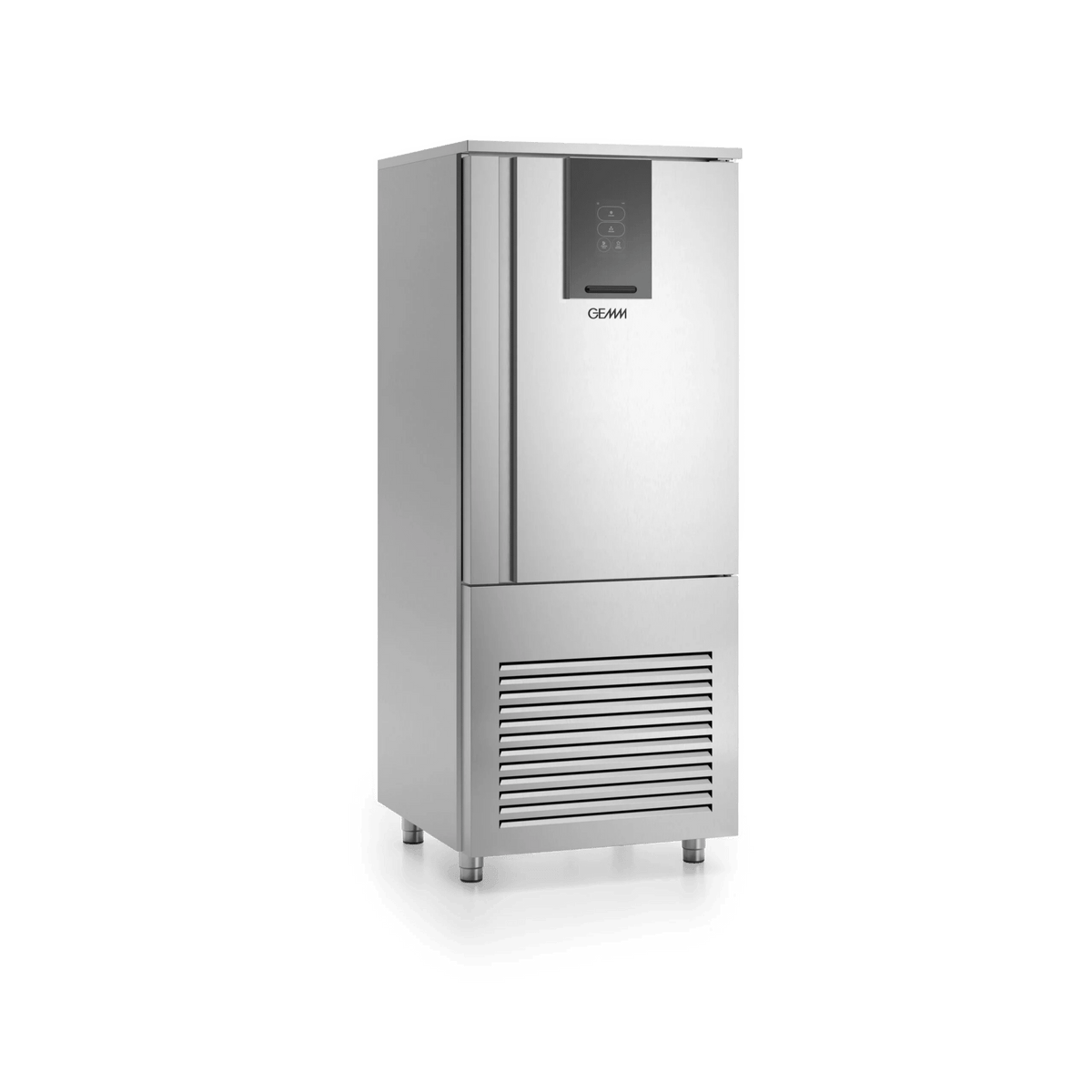


Gemm BCC6015GC Blast Freezer 40"×31.5" Trolley 230V with Gas Compressor
#BCC6015GC

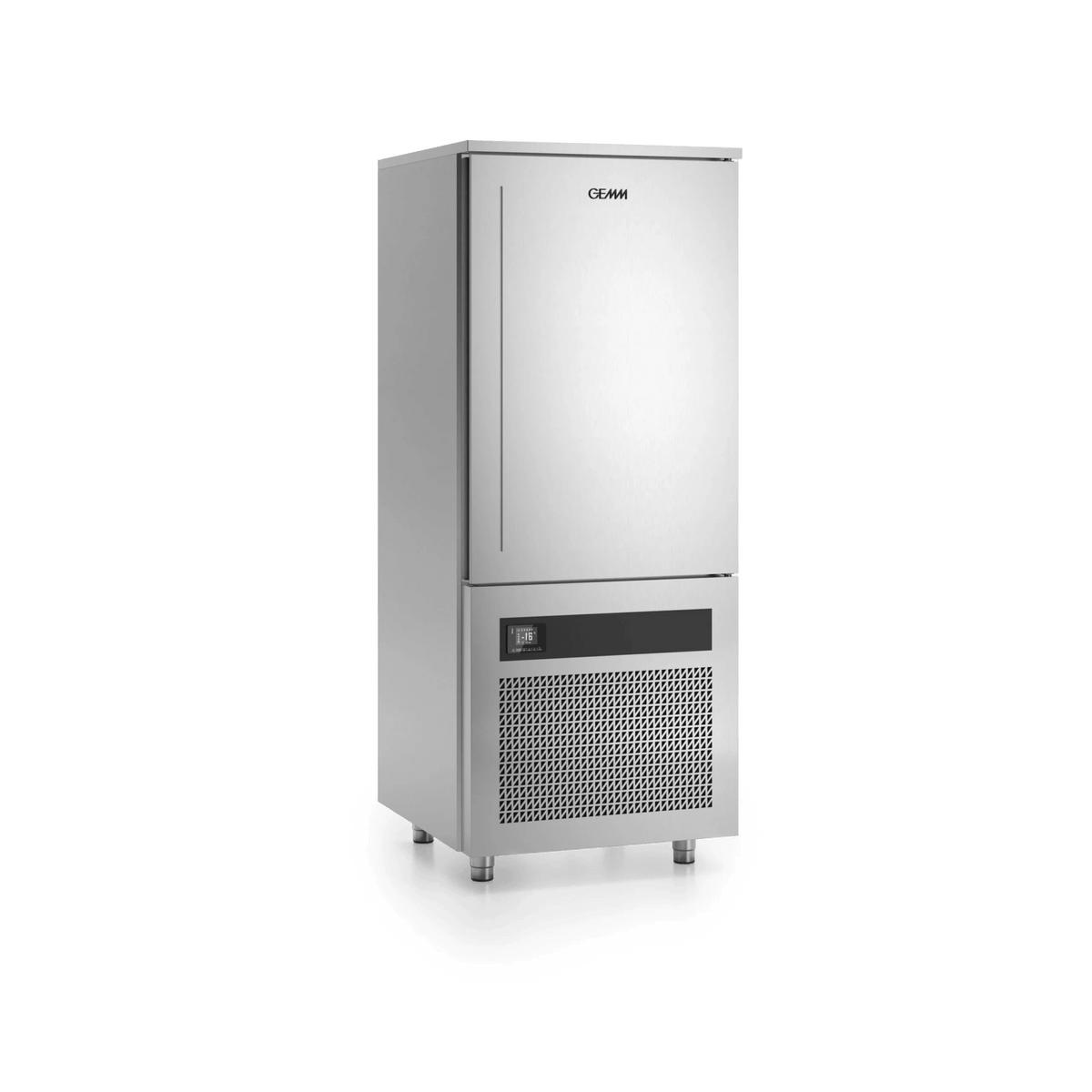


GEMM Commercial Blast Chillers & Specialty Refrigeration
GEMM commercial refrigeration is built around specialized food cooling, freezing, display, and storage applications for professional kitchens. At Nishi Enterprise, our GEMM collection focuses primarily on commercial blast chillers, shock freezers, roll-in blast freezers, gelato display refrigeration, professional wine cabinets, and OEM replacement components.
The GEMM blast chiller assortment ranges from compact 5-tray units for restaurants, bakeries, and catering kitchens through larger 10 and 15-tray machines and high-capacity roll-in systems designed for commissaries, hotels, institutional kitchens, and large-scale food production.
Available configurations include 120V and 230V equipment, single-phase and three-phase models, R290 natural-refrigerant versions, touchscreen-controlled BCT series equipment, and larger trolley-compatible blast freezing systems.
For additional rapid-cooling equipment, browse our Commercial Blast Chillers collection. You can also explore our broader Commercial Refrigeration selection.
What Is a Commercial Blast Chiller?
A commercial blast chiller is specialized refrigeration equipment designed to remove heat from cooked food much faster than an ordinary reach-in refrigerator.
Instead of placing a hot pan into conventional cold storage and waiting for the food to cool gradually, a blast chiller circulates very cold air around the product to reduce its temperature rapidly.
This makes blast chilling useful in restaurants, bakeries, hotels, caterers, commissaries, institutional kitchens, and other operations that prepare food ahead of service.
What Is a Shock Freezer?
A shock freezer takes rapid cooling further by lowering product temperature into a frozen state.
Many GEMM models combine both functions, allowing the same machine to perform blast chilling for refrigerated storage or shock freezing for frozen storage depending on the selected cycle.
This flexibility can make a combined blast chiller and shock freezer useful for kitchens handling a broad range of prepared foods.
Blast Chiller vs. Regular Refrigerator
A standard commercial refrigerator is designed primarily to maintain foods that are already cold.
A blast chiller is designed specifically to remove heat from recently cooked or processed food quickly.
These pieces of equipment perform different jobs and should not be treated as interchangeable simply because both operate below room temperature.
Blast Chiller vs. Freezer
A conventional freezer maintains frozen products during storage.
A shock freezer is designed to pull temperature down rapidly before the food is moved into longer-term frozen storage.
Operations with significant cook-chill or cook-freeze production may therefore use a blast chiller or shock freezer together with standard refrigerated and frozen storage.
Why Restaurants Use Blast Chillers
Restaurants may use blast chilling when preparing soups, sauces, cooked meats, casseroles, pasta, rice, desserts, fillings, and other foods ahead of service.
Rapid cooling can also support batch cooking, catering preparation, centralized production, and operations that need to transition prepared food efficiently from cooking into refrigerated storage.
GEMM Blast Chillers
The GEMM assortment at Nishi Enterprise includes several levels of commercial blast chilling equipment.
Current families include:
- BCB 5-tray blast chillers and shock freezers
- BCB 10-tray blast chillers and shock freezers
- BCB 15-tray blast chillers and shock freezers
- BCT touchscreen blast chillers
- R290 natural-refrigerant models
- Large BCC roll-in blast freezers
- Replacement trays, shelves, racks, and runners
GEMM BCB Series Blast Chillers
The GEMM BCB Series provides commercial blast chilling and shock freezing in 5, 10, and 15-tray formats.
This progression allows a restaurant to select capacity based on actual production rather than moving directly into oversized equipment.
GEMM BCB05US 5-Tray Blast Chiller
The GEMM BCB05US 5-Tray Blast Chiller & Shock Freezer provides a relatively compact entry point into professional blast chilling.
The current model holds five GN 1/1 trays and operates on 120V/60Hz power.
Its size makes it particularly relevant to restaurants, bakeries, pastry kitchens, caterers, and other operations that need rapid chilling but do not require the capacity of a 10 or 15-tray machine.
120V GEMM Blast Chillers
The BCB05US provides a 120V option within the GEMM lineup.
This can simplify electrical planning compared with larger machines requiring 230V or three-phase power, but operators should still confirm the exact electrical requirements and circuit capacity before installation.
GEMM BCB05USN R290 Blast Chiller
The GEMM BCB05USN provides a 5-tray configuration using R290 refrigerant.
This gives operators another option when selecting refrigeration technology while retaining the smaller five-tray equipment format.
GEMM BCB05US230 Blast Chiller
The BCB05US230 provides a 230V version of the five-tray blast chiller platform.
Electrical configuration should be evaluated alongside refrigeration type, installation conditions, and the rest of the kitchen's utility plan.
GEMM 10-Tray Blast Chillers
Ten-tray equipment roughly doubles the tray positions available in a five-tray machine.
This class is well suited to busy restaurants, hotel kitchens, caterers, production bakeries, and operations that regularly cool multiple sheet pans or hotel pans during the same production period.
GEMM BCB10US220 10-Tray Blast Chiller
The GEMM BCB10US220 10-Tray Blast Chiller & Freezer provides greater batch capacity than the BCB05 series.
Its 230V configuration makes electrical planning more important than with a basic 120V machine.
GEMM BCB10USN R290 Blast Chiller
The BCB10USN combines the larger 10-tray format with R290 refrigeration.
This can be useful for operators seeking a substantial production machine while selecting a natural-refrigerant configuration.
GEMM 15-Tray Blast Chillers
The 15-tray class moves into high-volume food production.
These machines are designed for operations that regularly need to cool or freeze larger quantities of prepared food within one production cycle.
GEMM BCB15US 15-Tray Blast Chiller
The GEMM BCB15US 15-Tray Blast Chiller & Shock Freezer provides the largest tray count within the standard BCB family represented in this collection.
Its 230V three-phase electrical requirement makes it more appropriate for commercial facilities already designed around higher-capacity equipment.
GEMM BCB15USN R290 Blast Chiller
The BCB15USN combines 15-tray capacity with R290 refrigerant.
This configuration is aimed at operations that need substantial batch capacity and have the electrical and kitchen infrastructure to support a large commercial blast chiller.
5-Tray vs. 10-Tray vs. 15-Tray Blast Chillers
The correct tray capacity depends primarily on how much food needs to be chilled during the busiest production period.
A 5-tray blast chiller can work well for smaller restaurants, bakeries, and pastry kitchens.
A 10-tray blast chiller provides additional capacity for busier kitchens and caterers.
A 15-tray blast chiller is better suited to high-volume production where several pans need to move through rapid cooling together.
Do You Need a Larger Blast Chiller?
Bigger is not automatically better.
A blast chiller should match the operation's normal and peak production.
Buying significantly more capacity than the kitchen uses can consume additional floor space and utility infrastructure without improving day-to-day workflow.
GEMM BCT Touchscreen Blast Chillers
The GEMM BCT Series adds touchscreen controls to commercial blast chilling.
These models are designed for operators who want a more advanced control interface and greater cycle-management capability than a basic machine.
GEMM BCT10US220 Touchscreen Blast Chiller
The GEMM BCT10US220 10-Tray Touch Panel Blast Chiller combines 10-tray capacity with a full-color touchscreen control system.
The current model supports programmable chilling and freezing cycles, temperature monitoring, and cycle management for professional kitchens that want additional process control.
It operates on 230V single-phase power.
GEMM BCT10USN R290 Touchscreen Blast Chiller
The BCT10USN combines the 10-tray touchscreen format with R290 refrigeration.
This creates a premium mid-capacity option for restaurants, hotels, catering kitchens, and food-production operations.
GEMM BCT15US Touchscreen Blast Chiller
The BCT15US moves the touchscreen platform into a 15-tray configuration.
It is designed for large production kitchens that need both capacity and advanced cycle control.
GEMM BCT15USN Touchscreen R290 Blast Chiller
The GEMM BCT15USN 15-Tray Touch Panel Blast Chiller combines one of the largest tray configurations in the lineup with touchscreen controls and R290 refrigeration.
This model is aimed at high-volume professional kitchens where rapid cooling is a central part of production rather than an occasional task.
BCB vs. BCT GEMM Blast Chillers
Both families provide commercial blast chilling, but the BCT series adds a more advanced touchscreen interface and additional cycle-control capabilities.
A restaurant that primarily needs straightforward rapid cooling may find a BCB configuration appropriate.
An operation that places greater emphasis on programmable cycles, process monitoring, or more advanced workflow control may prefer the BCT platform.
Blast Chillers with Core Temperature Probes
Core probes allow the machine to monitor the internal temperature of food rather than relying only on cabinet air temperature or elapsed time.
Several GEMM blast chillers include core-temperature monitoring as part of the chilling process.
This is particularly useful when kitchens need to know how rapidly the center of a batch is cooling.
Blast Chiller Temperature Logging
Advanced blast chiller systems can support temperature and cycle records that help professional kitchens document their cooling processes.
The touchscreen BCT models are especially relevant to operations that want more detailed process visibility.
GEMM Blast Chillers for Restaurants
Restaurants can use blast chillers when sauces, soups, proteins, cooked vegetables, pasta dishes, desserts, and other prepared foods are produced ahead of service.
A small independent restaurant may be able to work with a five-tray unit, while a large multi-station kitchen may need ten or fifteen tray positions.
GEMM Blast Chillers for Bakeries
Bakery and pastry operations can use rapid cooling for cakes, pastry components, fillings, creams, desserts, and other products where controlled cooling is important to the production schedule.
Blast chilling can become particularly useful when several stages of a dessert need to be completed within one shift.
GEMM Blast Chillers for Pastry Kitchens
Pastry kitchens frequently move products between heating, baking, cooling, assembly, refrigeration, and freezing.
A dedicated blast chiller can shorten the cooling stage and help the department move into the next production step more efficiently.
GEMM Blast Chillers for Catering
Catering companies often prepare large quantities of food in advance of an event.
Ten and fifteen-tray blast chillers can be particularly relevant when multiple pans of cooked food need to transition rapidly into refrigerated or frozen storage.
GEMM Blast Chillers for Hotels
Hotels may use blast chilling across banquet kitchens, restaurants, room service, pastry departments, commissaries, and event production.
A large property should consider total production across departments rather than sizing a machine only around one outlet.
GEMM Blast Chillers for Commissaries
Central kitchens that prepare food for multiple restaurants, stores, or service locations can require much larger rapid-cooling capacity than individual restaurants.
For these operations, GEMM offers 15-tray and roll-in equipment that moves beyond conventional undercounter or reach-in-scale blast chilling.
GEMM Blast Chillers for Institutional Kitchens
Hospitals, schools, universities, senior-care facilities, corporate dining operations, and other institutions may prepare large batches according to structured production schedules.
Blast chilling can support cook-chill workflows where prepared foods are cooled before later storage, transport, or service.
GEMM Blast Chillers for Banquet Kitchens
Banquet operations may need to prepare several hundred portions before an event begins.
High-capacity blast chilling can help large kitchens coordinate advance production without relying solely on standard refrigeration to remove heat from freshly cooked food.
GEMM Blast Chillers for Meal Prep & Central Production
Businesses built around prepared meals can also benefit from rapid chilling.
When food is cooked in large batches and packaged for later distribution or service, cooling becomes a major part of production planning.
GEMM Roll-In Blast Freezers
For production volumes beyond standard tray-loaded cabinets, GEMM offers roll-in blast freezers.
Instead of loading individual trays one at a time into a smaller cabinet, a roll-in system can accommodate a loaded trolley.
This can significantly change the workflow in high-volume production kitchens.
What Is a Roll-In Blast Freezer?
A roll-in blast freezer is a large insulated cooling chamber designed to accept a compatible mobile rack or trolley.
Prepared food can be organized on trays outside the cabinet and then rolled into the blast freezer as one loaded assembly.
This format is aimed at large-scale production rather than normal small restaurant prep.
GEMM BCC4008 Roll-In Blast Freezer
The GEMM BCC4008 Roll-In Blast Freezer is a large-format unit compatible with GN 1/1 and GN 2/1 pan formats.
Its roll-in configuration allows a compatible loaded trolley to enter the freezing chamber directly.
The current model uses a built-in compressor and 220V three-phase electrical service.
GEMM BCC6015GC Large Blast Freezer
The GEMM BCC6015GC Blast Freezer is an even larger trolley-compatible system designed for industrial-scale production.
Its chamber is configured around an approximately 40" x 31.5" trolley format and uses a remote compressor arrangement.
This type of equipment is aimed at commissaries, food-production facilities, high-volume caterers, and institutional operations rather than ordinary small restaurants.
Self-Contained vs. Remote Blast Freezers
A self-contained blast freezer houses the primary refrigeration system with the equipment.
A remote configuration places part of the refrigeration system outside the main cabinet or production area.
Large installations should be planned with refrigeration contractors and facility professionals because the infrastructure requirements can be substantially different.
When Do You Need a Roll-In Blast Freezer?
Roll-in equipment makes sense when the operation routinely fills entire racks or trolleys with product that needs rapid cooling or freezing.
If the kitchen only processes several pans at a time, a five, ten, or fifteen-tray cabinet may be more practical.
GEMM Blast Chillers & GN Pans
Several GEMM blast chillers are designed around GN 1/1 tray formats, while larger roll-in equipment can accommodate additional gastronorm configurations.
Confirm tray dimensions and rack compatibility before ordering accessories or planning production around existing pans.
GEMM Replacement Trays
Nishi Enterprise also carries OEM GEMM replacement trays for selected blast chiller models.
Current options include replacements designed for BCB05, BCB10, and BCB15 equipment.
Match the accessory to the exact machine model before ordering.
GEMM Replacement Shelves
The collection includes replacement shelving for compatible GEMM BCB blast chillers.
OEM-compatible shelving can help restore an existing cabinet or expand a setup according to the machine's supported configuration.
GEMM Replacement Tray Runners
Replacement runners are also available for selected blast chiller and gelato cabinet applications.
Because similar-looking runners can differ between equipment families, verify the original model number before ordering replacement parts.
Why Exact GEMM Model Numbers Matter
Commercial refrigeration parts should be selected by exact equipment compatibility.
A tray, rack, shelf, or runner intended for one cabinet should not be assumed to fit another model simply because the dimensions appear similar.
R290 GEMM Blast Chillers
Several GEMM models in the collection use R290 refrigerant.
R290 is used in a growing range of commercial refrigeration equipment, but service should still be handled according to manufacturer procedures by professionals qualified to work on the specific refrigeration system.
R449A GEMM Blast Chillers
Other GEMM configurations use R449A refrigerant.
This gives buyers different equipment configurations depending on the specific model, electrical requirements, and project needs.
120V vs. 230V GEMM Blast Chillers
Electrical requirements increase as blast chiller capacity and refrigeration load grow.
Smaller five-tray models include 120V configurations, while larger equipment commonly requires 230V.
Verify voltage, phase, amperage, plug or hardwire requirements, and available panel capacity before selecting a machine.
Single-Phase vs. Three-Phase GEMM Equipment
Some GEMM equipment operates on single-phase electrical service, while larger machines require three-phase power.
Three-phase availability should be confirmed early in a project because it is not present in every restaurant location.
Do Not Order a Blast Chiller Before Checking Utilities
Blast chillers are refrigeration systems with significant electrical and ventilation requirements.
Check the exact installation manual and utility specifications before the equipment arrives.
This becomes especially important with large 230V and three-phase units.
Planning Space for a GEMM Blast Chiller
Measure equipment width, depth, height, door swing, ventilation requirements, and working clearance.
Also consider how sheet pans, hotel pans, or loaded trolleys will approach the machine during normal production.
Blast Chiller Placement in a Commercial Kitchen
A blast chiller works best when it is positioned logically between production and storage.
If employees must carry hot pans across the entire kitchen before reaching the chiller, the workflow may become unnecessarily difficult.
Plan the equipment around the actual movement of food through the kitchen.
Blast Chillers & Prep Tables
Food entering a blast chiller usually moves through several preparation stages first.
Stable stainless steel work surfaces nearby can help employees organize pans and products before and after chilling.
Browse our Food Prep Tables for related commercial prep equipment.
Blast Chillers & Commercial Refrigerators
A blast chiller is generally part of a larger refrigeration system rather than a replacement for standard storage.
Once food has completed its rapid chilling cycle, it may need to move into appropriate refrigerated storage.
Browse our Commercial Refrigeration for related cold-storage equipment.
Blast Chillers & Freezers
Shock-frozen products also need appropriate frozen storage after the rapid freezing process is complete.
The blast freezer handles the initial temperature reduction, while a commercial freezer maintains the product afterward.
GEMM Gelato Display Cabinets
GEMM also extends beyond back-of-house rapid cooling into customer-facing dessert refrigeration.
The GEMM ARG30 Gelato Display Cabinet is designed for gelato, artisanal ice cream, sorbet, and specialty dessert presentation.
GEMM ARG30 Gelato Cabinet
The ARG30 uses a five-shelf display configuration with stainless steel and glass construction.
It operates on 110V and uses R290 refrigerant, making it a very different type of equipment from GEMM's large blast chilling systems.
This cabinet is aimed at gelaterias, pastry shops, dessert counters, hotels, restaurants, and other customer-facing foodservice environments.
Gelato Display Cabinet vs. Blast Freezer
A gelato display cabinet is designed to hold and present frozen desserts at serving conditions.
A blast freezer is designed to remove heat rapidly during production.
A gelato business may use both categories, but they perform separate roles.
GEMM Gelato Cabinet Accessories
The GEMM collection includes replacement rack and runner components for the ARG30 gelato cabinet.
These OEM components allow existing equipment owners to replace compatible interior hardware without purchasing an entire cabinet.
GEMM Wine Cabinets
The collection also includes professional GEMM wine refrigeration for restaurants, hotels, wine bars, and premium hospitality operations.
Current models include approximately 104 and 176-bottle configurations.
GEMM WD5121 104-Bottle Wine Cabinet
The GEMM WD5121 Wine Cabinet provides approximately 104-bottle capacity in a stainless steel cabinet with glass-door presentation.
The model combines static and ventilated cooling modes and provides temperature control intended for professional wine storage.
GEMM WD7121 176-Bottle Wine Cabinet
The GEMM WD7121 Wine Cabinet increases storage capacity to approximately 176 bottles.
This larger format can make sense for restaurants and hotels with extensive wine lists that require more bottle storage within one commercial cabinet.
104 vs. 176-Bottle GEMM Wine Cabinets
The 104-bottle WD5121 can suit restaurants with a curated wine program and moderate storage requirements.
The 176-bottle WD7121 provides substantially more capacity for larger programs.
Choose based on the actual number of labels, par levels, bottle shapes, and turnover rather than nominal capacity alone.
Commercial Wine Cabinet vs. Back Bar Cooler
A commercial wine cabinet is designed specifically around bottle storage and wine-friendly temperature management.
A conventional back-bar refrigerator is generally used for beer, mixers, canned drinks, and other beverages.
Restaurants with serious wine programs may benefit from dedicated wine refrigeration rather than treating all beverage storage as interchangeable.
GEMM Refrigeration for Fine Dining Restaurants
Fine dining restaurants may use GEMM equipment in several areas.
A blast chiller can support prep and pastry production, while a dedicated wine cabinet can support the beverage program.
Operations with an in-house gelato or dessert program can also consider specialized display refrigeration.
GEMM Refrigeration for Hotels
Hotels may need rapid cooling in banquet and production kitchens, wine refrigeration in restaurants and lounges, and specialty dessert display equipment in cafés or buffets.
GEMM's specialized assortment makes the brand particularly relevant to properties with multiple foodservice departments.
GEMM Refrigeration for Bakeries & Pastry Shops
Pastry shops can use blast chilling during production and a gelato or dessert display cabinet in customer-facing areas.
This combination connects back-of-house production with front-of-house presentation.
GEMM Refrigeration for Gelaterias
A dedicated gelateria may need production freezers, rapid freezing, storage, and customer-facing display refrigeration.
The ARG30 supports the display side of that workflow, while blast freezing equipment may be relevant to larger production programs.
GEMM Equipment for Central Kitchens
Central kitchens are among the strongest applications for large GEMM blast chilling equipment.
When hundreds of portions are produced ahead of delivery or service, rapid cooling becomes part of the production system rather than simply an occasional refrigeration task.
Choosing a GEMM Blast Chiller
Before comparing individual models, determine:
- How many trays need to be processed per cycle
- Maximum production volume
- Whether blast chilling, shock freezing, or both are required
- Available voltage and electrical phase
- Available floor space
- Pan and tray format
- Whether basic or touchscreen controls are preferred
- Refrigerant configuration
- Whether trolley or roll-in loading is required
Choosing a GEMM Blast Chiller for a Small Restaurant
A five-tray model can provide an appropriate starting point for an operation that needs rapid cooling but does not produce dozens of pans at once.
The smaller cabinet also requires less floor space than the 10, 15-tray, or roll-in systems.
Choosing a GEMM Blast Chiller for a Busy Restaurant
Ten-tray equipment can provide a useful middle ground for restaurants with substantial advance prep.
It increases batch capacity without moving into the physical scale and infrastructure requirements of a roll-in system.
Choosing a GEMM Blast Chiller for High-Volume Production
Fifteen-tray or roll-in equipment should be considered when smaller cabinets would become a production bottleneck.
At this scale, the blast chilling system should be planned alongside cooking capacity, pan inventory, storage refrigeration, and staff workflow.
Touchscreen vs. Standard Blast Chiller Controls
A basic-control model may be sufficient for straightforward repeated cycles.
A touchscreen machine can offer more flexibility for operations that want saved programs, more detailed cycle management, and easier access to process information.
GEMM Blast Chiller Maintenance
Commercial blast chillers should be cleaned and maintained according to the exact model's manufacturer instructions.
Food-contact areas, trays, shelves, gaskets, probes, and cabinet surfaces should be incorporated into the kitchen's normal sanitation program.
Clean GEMM Trays & Shelves Regularly
Trays and shelves can accumulate food residue during repeated production cycles.
Removable components should be cleaned according to manufacturer guidance and returned to the correct rack positions before operation.
Inspect Door Gaskets
A blast chiller depends on an effective insulated cabinet seal.
Inspect door gaskets for damage, debris, or deterioration that could prevent the door from sealing properly.
Keep Refrigeration Components Serviceable
Commercial refrigeration systems require adequate ventilation and periodic professional service.
Do not block required air openings or install equipment in a configuration that conflicts with manufacturer clearance requirements.
Service R290 Equipment Appropriately
R290 refrigeration should be serviced by personnel qualified to work with the specific equipment and refrigerant system.
Follow manufacturer procedures rather than treating refrigerant service as general maintenance.
Verify Electrical Requirements Before Installation
GEMM models span 120V, 220V, and 230V configurations, including both single and three-phase equipment.
Electrical service should be verified for the exact SKU before purchase and installation.
GEMM Replacement Parts & Accessories
In addition to complete refrigeration equipment, the Nishi Enterprise GEMM collection includes selected OEM accessories and replacement components.
These include trays, shelves, runners, and gelato cabinet rack components designed for specific GEMM models.
Why Buy OEM GEMM Components?
Model-specific replacement parts reduce uncertainty about dimensions and fit.
When replacing a shelf, runner, tray, or rack, confirm both the GEMM equipment model and the replacement part number before ordering.
GEMM & Commercial Blast Chillers
GEMM is one of the specialized brands represented in our larger Commercial Blast Chillers collection.
That broader category allows restaurants to compare GEMM equipment with other blast chilling solutions according to size, capacity, electrical requirements, controls, and budget.
GEMM & Commercial Refrigeration
Blast chillers, wine cabinets, and gelato displays are specialized forms of refrigeration that normally operate alongside reach-ins, freezers, prep tables, and other cold-storage equipment.
Browse our Commercial Refrigeration collection when planning the complete cold side of a restaurant or production kitchen.
GEMM & Refrigerated Display Equipment
Businesses selling desserts may also need additional refrigerated display equipment for cakes, pastries, and other products.
Browse our Refrigerated Bakery Cases for complementary display refrigeration.
Planning a Complete Cook-Chill System
A blast chiller should be considered as part of the complete production flow.
Food moves from cooking equipment into appropriate pans, through rapid cooling, and then into refrigerated or frozen storage.
The kitchen needs enough equipment and space at each stage so one step does not become a bottleneck.
Blast Chillers for Cook-Chill Production
Cook-chill production separates food preparation from final service by cooling prepared foods for later use.
Restaurants considering this workflow should develop processes around their menu, food-safety requirements, storage, reheating, labeling, and production schedule rather than viewing the blast chiller as a complete system by itself.
Blast Chillers for Cook-Freeze Production
Shock freezing can be integrated into operations that prepare products for longer frozen storage.
The appropriate process depends on the food, packaging, storage equipment, production schedule, and applicable food-safety requirements.
Why Blast Chiller Capacity Matters
A blast chiller can only improve workflow if the kitchen has enough room to process the food being produced.
If ten pans regularly come off the cooking line together, repeatedly cycling a very small cabinet may slow the operation.
Capacity should therefore be based on peak production batches, not just total food produced over an entire day.
Why Tray Format Matters
Restaurants often standardize around certain sheet pans, hotel pans, or GN pans.
Check the GEMM machine's supported tray format before assuming existing kitchen pans will fit.
This is especially important when building a new blast-chilling workflow around equipment the kitchen already owns.
GEMM for New Restaurant Projects
Restaurants planning from the ground up have an opportunity to position blast chilling logically within the production flow and provide the necessary electrical service before walls and equipment layouts are finalized.
This is generally easier than trying to fit high-capacity refrigeration into an existing kitchen after construction is complete.
GEMM for Existing Kitchen Upgrades
Existing restaurants can also add blast chilling when production volume, catering, meal prep, or food-safety procedures make rapid cooling increasingly important.
Before purchasing, review utility availability, floor space, doorway clearance, ventilation, and how the equipment will integrate with existing refrigerators and freezers.
Why Shop GEMM at Nishi Enterprise?
Nishi Enterprise supplies commercial refrigeration and complete restaurant equipment projects, allowing GEMM blast chillers and specialty refrigeration to be evaluated alongside the rest of the kitchen.
That can be particularly valuable when a project involves cooking equipment, rapid cooling, cold storage, prep tables, bakery equipment, and other components that need to work together.
Shop GEMM Commercial Refrigeration
Nishi Enterprise carries GEMM blast chillers, GEMM shock freezers, commercial blast freezers, touchscreen blast chillers, R290 blast chillers, roll-in blast freezers, gelato display cabinets, commercial wine cabinets, and GEMM replacement parts for professional foodservice operations.
The current assortment ranges from compact 5-tray blast chillers through 10 and 15-tray BCB and BCT systems, large trolley-compatible BCC blast freezers, the ARG30 gelato display cabinet, 104 and 176-bottle wine cabinets, and model-specific replacement trays, racks, shelves, and runners.
Whether you are adding rapid cooling to a restaurant, outfitting a pastry kitchen, building a hotel banquet operation, planning a central commissary, displaying artisan gelato, or expanding a professional wine program, explore the GEMM collection above to compare capacity, tray count, voltage, electrical phase, refrigerant, controls, and application.