


Blast Chillers


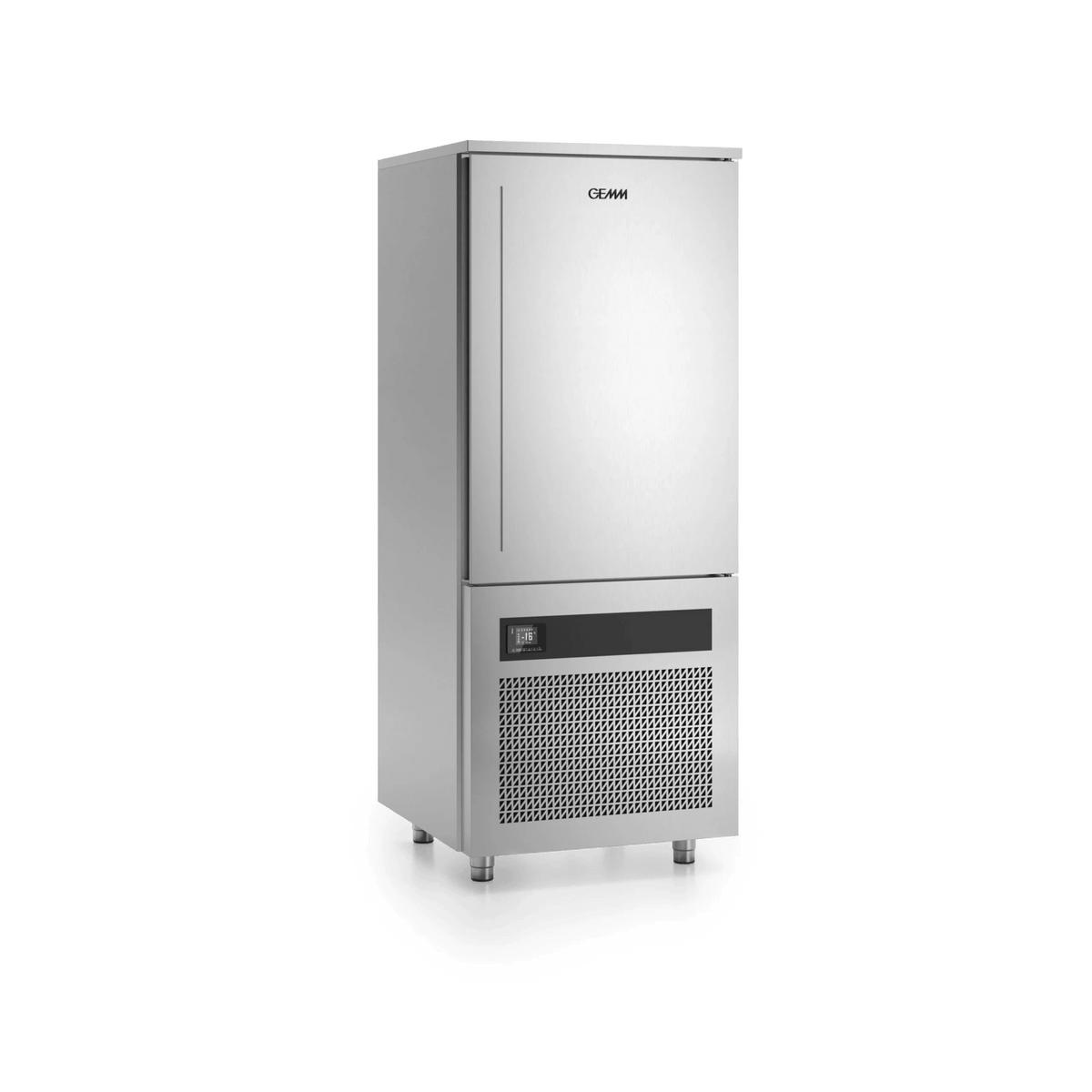


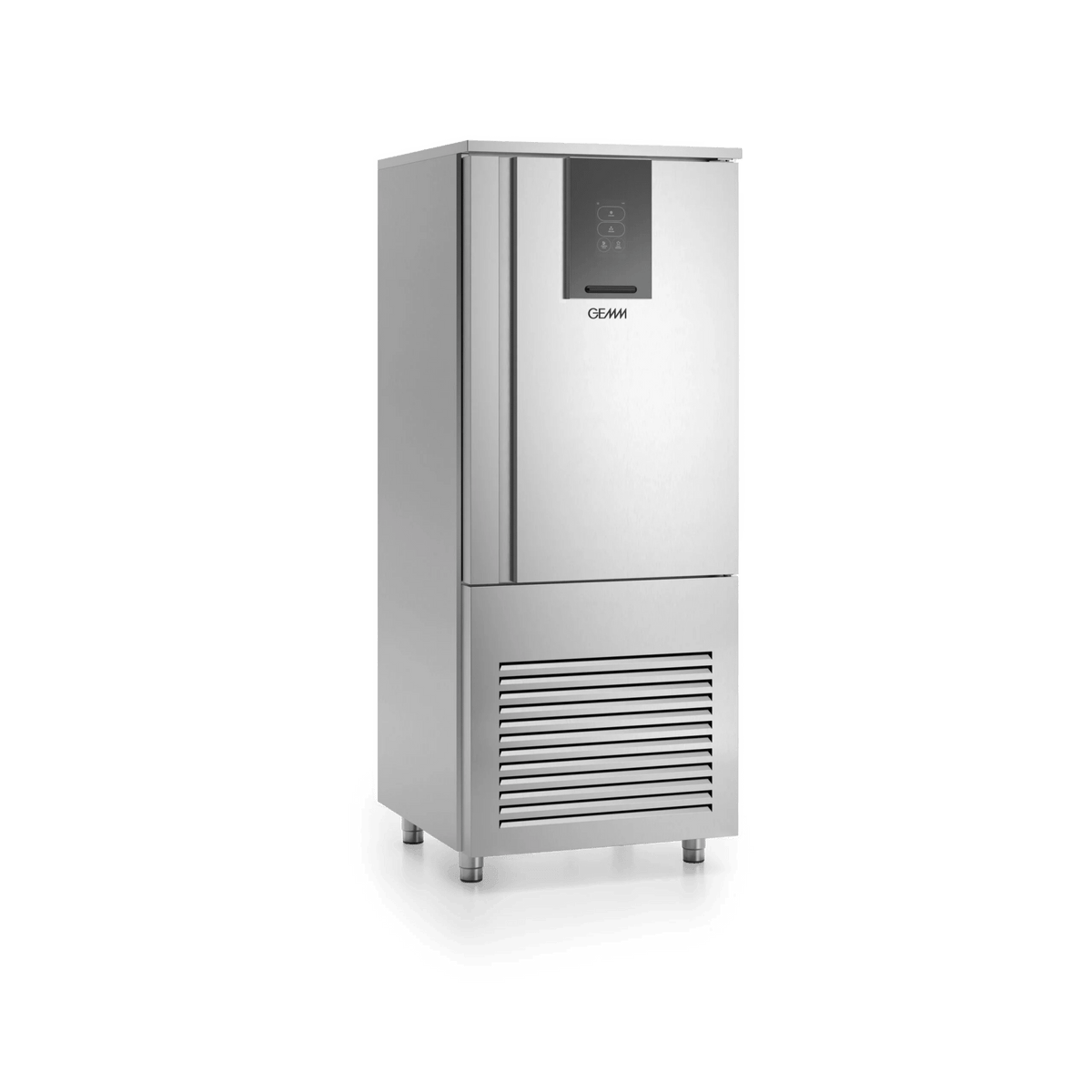

Commercial Blast Chillers & Blast Freezers for Restaurants
A commercial blast chiller is designed to reduce the temperature of cooked or prepared food much faster than a standard refrigerator. For restaurants, bakeries, caterers, banquet facilities, hotels, commissaries, and high-volume food production kitchens, this rapid cooling capability can become an important part of an organized cook-chill workflow.
At Nishi Enterprise, our blast chiller collection includes commercial blast chillers, blast chiller/freezer combinations, shock freezers, countertop and floor models, and high-capacity multi-tray units from brands including Atosa, Eurodib, and Gemm.
Our current assortment ranges from compact units with three full-size pan capacity to 5-tray, 10-tray, and 15-tray blast chillers for larger production environments. Available configurations include 120V units, higher-capacity 230V models, touch-panel controls, and models designed for both blast chilling and shock freezing.
For the rest of your cold-storage equipment, browse our Commercial Refrigeration collection.
What Is a Blast Chiller?
A blast chiller is a commercial refrigeration appliance designed to cool hot or warm food rapidly.
A normal reach-in refrigerator is primarily designed to hold food that is already cold. A blast chiller is designed for a different job. It actively pulls heat out of freshly prepared food much more aggressively so the product can move from cooking to chilled storage as part of a controlled production process.
This can be useful for restaurants that prepare sauces, soups, cooked proteins, pasta, rice dishes, desserts, bakery products, banquet food, and other menu components in advance.
After the blast chilling cycle is complete, the food can typically be transferred into appropriate cold storage such as a Reach-In Refrigerator or other refrigerated storage equipment, depending on the food and the kitchen's procedures.
Blast Chiller vs. Regular Refrigerator
A blast chiller and a commercial refrigerator should not be viewed as interchangeable equipment.
A commercial refrigerator is primarily designed to maintain cold food at refrigerated temperatures throughout storage.
A blast chiller is designed to remove heat from recently cooked or prepared food quickly.
Putting large quantities of hot food directly into normal refrigeration can place additional demand on the refrigerator and may affect the surrounding products already being stored inside. A dedicated blast chiller allows the rapid cooling step to take place separately before the food enters normal refrigerated storage.
Restaurants that prepare substantial quantities of food ahead of service may therefore use both pieces of equipment as part of the same workflow.
Blast Chiller vs. Blast Freezer
Many units in this collection can perform more than one function. Depending on the model, the equipment may be described as a blast chiller, blast chiller/freezer, or shock freezer.
Blast chilling focuses on rapidly reducing food temperature for refrigerated storage. Blast freezing or shock freezing continues the cooling process to much lower temperatures for frozen storage.
This additional capability can be especially useful for bakeries, pastry operations, commissaries, caterers, and restaurants that prepare products in advance and need both chilled and frozen production workflows.
Always compare the exact capabilities of the individual model before purchasing, because cycle options and operating specifications vary between blast chillers.
Atosa Blast Chillers
Nishi Enterprise carries commercial blast chillers from Atosa for restaurants and foodservice businesses looking for smaller-capacity rapid cooling equipment.
The Atosa EBF-03 Blast Chiller/Freezer provides capacity for three full-size pans, making it a practical option for kitchens that need blast chilling capability without moving immediately into a larger multi-tray machine.
For additional capacity, the Atosa EBF-05 Blast Chiller/Freezer accommodates five full-size pans.
These smaller blast chillers can fit well in restaurants, bakeries, catering kitchens, and foodservice operations where batch sizes are substantial enough to justify rapid cooling equipment but do not require the capacity of a 10 or 15-tray unit.
5-Tray Commercial Blast Chillers
A 5-tray blast chiller can provide a useful balance between production capacity and equipment footprint.
Five-tray models are well suited to smaller restaurants, bakeries, pastry kitchens, catering operations, and commercial kitchens that prepare several pans or trays of product at a time.
The Eurodib BCB05US 5-Tray Commercial Blast Chiller operates on 120V power and is designed for commercial rapid-cooling applications.
Nishi also carries multiple Gemm 5-tray blast chiller and shock freezer configurations, including models designed around different electrical requirements and refrigerants.
This capacity can be a good starting point for a restaurant introducing a cook-chill process or a bakery looking for dedicated rapid cooling without committing the floor space required by a larger 15-tray unit.
10-Tray Commercial Blast Chillers
A 10-tray blast chiller significantly increases batch capacity for restaurants and production kitchens processing larger quantities of food.
The Eurodib BCB10US220 10-Tray Commercial Blast Chiller is designed for higher-volume operations and uses a 208/240V electrical configuration.
Nishi also carries 10-tray Gemm blast chillers and shock freezers, including standard-control and touch-panel models.
This size can make sense for banquet kitchens, central production kitchens, caterers, larger restaurants, hotels, bakeries, and operations preparing multiple trays of food for future service.
15-Tray Blast Chillers for High-Volume Kitchens
For substantial production environments, a 15-tray blast chiller provides considerably more capacity per cycle.
Nishi Enterprise carries Gemm 15-tray blast chillers and shock freezers designed for commercial kitchens where several trays must be cooled during the same production period.
These larger models are particularly relevant to banquet facilities, commissaries, institutional kitchens, hotel foodservice, large bakeries, catering companies, central kitchens, and other operations producing food in significant batches.
Some 15-tray models require 230V three-phase electrical service, so operators should carefully verify the electrical requirements before placing an order.
Touchscreen Blast Chillers
Some Gemm models in this collection are available with advanced touch-panel controls.
Touchscreen blast chillers can provide a more modern interface for managing chilling and freezing cycles, particularly in kitchens that run several different products through the machine.
Nishi currently carries Gemm BCT series blast chillers in 10-tray and 15-tray configurations, including models with touch-panel control systems.
Restaurants comparing standard-control and touchscreen machines should consider the complexity of their production process, staff training, menu variety, and how frequently different blast chilling programs will be used.
120V vs. 230V Blast Chillers
Electrical service is an important part of choosing a commercial blast chiller.
Some smaller 5-tray machines are available in 120V configurations, which may simplify placement in kitchens that already have appropriate electrical service available.
Larger 10-tray and 15-tray blast chillers often require 208/240V or 230V power, and some high-capacity units may require three-phase electrical service.
Never select a blast chiller based only on physical capacity. Check voltage, phase, amperage, plug or hardwiring requirements, and any other electrical specifications for the exact model before purchasing.
A qualified professional should verify that your facility can support the appliance before installation.
Blast Chillers for Restaurants
Restaurants can use blast chillers to organize production around menu items that are prepared before service.
Instead of producing every component entirely during the rush, a kitchen may prepare certain foods earlier, rapidly chill them, store them appropriately, and finish or reheat them according to the operation's procedures.
This workflow can be useful for sauces, soups, braised dishes, prepared proteins, rice dishes, pasta components, side dishes, desserts, and other products that are produced in batches.
The exact value of a blast chiller depends heavily on the restaurant's menu. A small made-to-order operation may use one less frequently, while a banquet kitchen or production-heavy restaurant may rely on it every day.
Blast Chillers for Bakeries & Pastry Kitchens
Blast chillers and shock freezers can also be valuable equipment in bakeries, pastry shops, dessert production facilities, and hotel pastry departments.
Rapid temperature reduction can support production workflows for cakes, pastries, creams, fillings, chocolate work, frozen desserts, and other products where temperature plays a significant role in preparation and storage.
Five-tray machines can work well for smaller bakeries, while 10 or 15-tray configurations provide greater capacity for wholesale bakeries and larger pastry operations.
When building a larger bakery production kitchen, blast chilling equipment can be paired with ovens, mixers, refrigeration, work tables, and other prep equipment.
Blast Chillers for Catering Companies
Catering operations often produce large quantities of food before the actual event begins. That makes temperature management and organized batch production especially important.
A commercial blast chiller can become part of a workflow where food is cooked in advance, rapidly cooled, stored appropriately, transported according to the caterer's process, and reheated or finished when needed.
The appropriate blast chiller capacity depends on the size of events the company handles and the number of trays being processed during each production period.
Smaller caterers may find a 5-tray model sufficient, while large wedding and banquet operations may need 10 or 15-tray capacity.
Blast Chillers for Banquet & Hotel Kitchens
Hotels and banquet facilities frequently prepare food for hundreds of guests within a short service window.
Because production may begin hours or even days before an event, a structured cook-chill process can help the kitchen organize large batches more effectively.
Higher-capacity blast chillers are particularly relevant in these environments because several sheet pans or food pans may need to be processed at once.
Operators with large banquet production should consider not only tray capacity but also how many chilling cycles can realistically be completed during the production schedule.
Blast Chillers for Commissaries & Central Kitchens
Commissaries and central production kitchens can have some of the highest blast chilling demands in foodservice.
These facilities may prepare food for several restaurant locations, schools, healthcare operations, corporate cafeterias, catering events, or satellite kitchens.
A 10 or 15-tray blast chiller can help create a more scalable production system when food is prepared centrally and stored before distribution.
For these operations, refrigeration should be planned as a complete system. Blast chilling capacity needs to work alongside normal refrigerated and frozen storage capacity.
Pairing Blast Chillers with Reach-In Refrigeration
A blast chiller handles the rapid cooling stage, but it does not eliminate the need for normal refrigeration.
After food has completed the appropriate chilling cycle, restaurants typically need dedicated refrigerated or frozen storage for continued holding.
Browse our Reach-In Refrigerators and Reach-In Freezers when planning the storage side of your kitchen.
For operations with limited space, Undercounter Refrigerators can provide additional cold storage closer to individual prep or cooking stations.
Pairing Blast Chillers with Commercial Ovens
Blast chilling often begins immediately after cooking, so the relationship between cooking capacity and cooling capacity matters.
A kitchen producing several trays of food in commercial ovens needs enough blast-chilling capacity to handle those trays when the cooking cycle is complete.
If the blast chiller is dramatically undersized compared with production equipment, the kitchen may create a bottleneck after cooking.
For additional oven equipment, browse our Commercial Convection Ovens collection.
How Many Trays Should a Blast Chiller Hold?
The best capacity depends on how much food your kitchen needs to cool during its busiest production period.
A 3-pan or 5-tray blast chiller may be appropriate for smaller restaurants, pastry shops, cafés, specialty kitchens, and moderate catering production.
A 10-tray blast chiller provides more capacity for busy restaurants, banquet kitchens, hotels, and larger catering operations.
A 15-tray blast chiller is better suited to high-volume production environments where significant quantities of prepared food must move through the chilling process.
Do not choose capacity based only on the maximum amount the kitchen might produce once or twice per year. Look at typical production volume, peak weekly demand, cycle frequency, and available kitchen space.
Choosing a Commercial Blast Chiller
Begin by determining how many pans or trays need to be cooled during a normal production cycle.
Next, decide whether you need blast chilling only or a unit that can also perform blast freezing or shock freezing.
Then compare physical dimensions, tray compatibility, electrical service, control system, refrigerant type, installation requirements, and the amount of space available in the kitchen.
A smaller operation may prioritize a 120V 5-tray unit, while a large production kitchen may require a 10 or 15-tray machine with 230V power.
Operators should also consider where the blast chiller will sit in relation to cooking equipment, prep tables, and long-term refrigerated storage. The shortest practical movement between cooking, chilling, and storage can help create a more efficient production layout.
Atosa, Eurodib & Gemm Blast Chillers
Nishi Enterprise carries blast chilling equipment from multiple commercial refrigeration manufacturers.
Atosa offers compact blast chiller/freezer models with three and five full-size pan capacities.
Eurodib offers commercial 5-tray and 10-tray blast chillers for different kitchen capacities and electrical setups.
Gemm offers an extensive lineup of blast chillers and shock freezers, including 5, 10, and 15-tray models, standard and touchscreen controls, and multiple refrigerant and electrical configurations.
This range allows restaurants to compare equipment based on their actual production needs instead of forcing every kitchen into the same size or format.
Shop Commercial Blast Chillers at Nishi Enterprise
Nishi Enterprise carries commercial blast chillers, blast chiller freezers, shock freezers, 5-tray blast chillers, 10-tray blast chillers, 15-tray blast chillers, and rapid cooling equipment for restaurants, bakeries, catering companies, hotels, banquet facilities, commissaries, and other commercial foodservice operations.
Our collection includes models from Atosa, Eurodib, and Gemm, with capacities ranging from compact three-pan units to high-volume 15-tray systems. Available options include 120V and 230V configurations, standard controls, touch-panel controls, and machines capable of both blast chilling and shock freezing.
Explore the collection above to compare capacities and configurations. If you are designing a complete commercial kitchen, contact Nishi Enterprise and our team can also help you plan the refrigeration, cooking equipment, prep equipment, and other components needed for your operation.