


Thali


Premium Stainless Steel Thali - 13 Inch Traditional Indian Dining Plate
#Steel-Thali-13-B


Ultimate Bahubali 30" Round Stainless Steel Thali Platter - Grand Serving Tray
#Steel-Thali-30

Stainless Steel Round Compartment Plate / Thali Mess Tray with 5 compartments - 13"
#New-DLX-Bhojanpatra


Stainless Steel Rectangular Compartment Plate / Thali with 5 Square compartments - 13"
#Steel-Rect-thali-5-S


Stainless Steel Rectangular Compartment Plate / Thali with 7 compartments - 16"
#7-compartment-thali

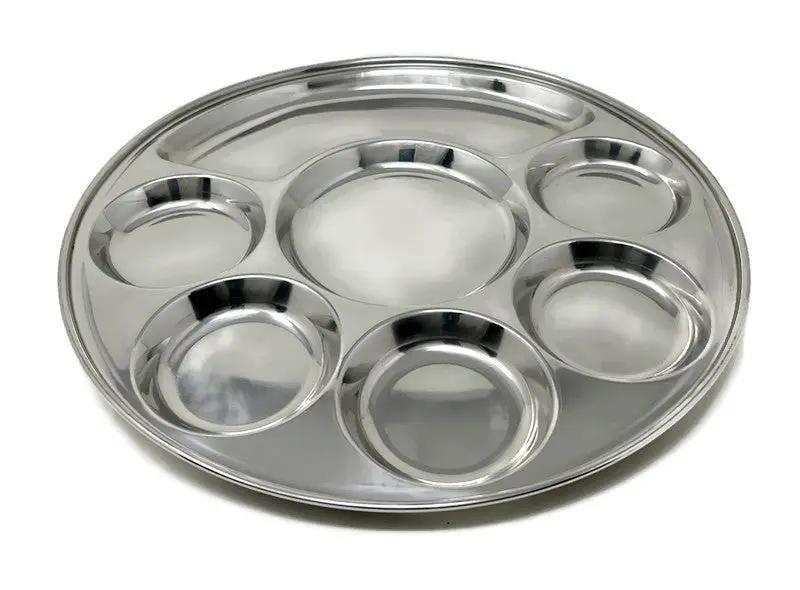


Stainless Steel Rectangular Compartment Plate / Thali with 6 compartments- 13"
#6-compartment-thali


Commercial Stainless Steel Oval Thali Mess Tray - 4 Compartment Platter
#Steel-Oval-thali-4-T


Indian Thali Plates & Restaurant Serving Platters
Thali plates are an essential part of Indian restaurant dining, allowing multiple dishes, breads, rice, accompaniments, and desserts to be presented together as one complete meal. From traditional stainless steel plates surrounded by individual katoris to compartment trays and oversized family-style platters, the thali can be adapted to many different restaurant concepts and regional cuisines.
At Nishi Enterprise, our Thali collection includes stainless steel thalis, hammered thali platters, 18/8 stainless steel plates, gold-finish thalis, rose-gold thalis, copper and stainless steel platters, round thalis, oval thalis, square thalis, compartment thalis, dosa trays, Maharashtrian and Gujarati-style thalis, Mandi platters, Bahubali thalis, and specialty serving pieces.
Available sizes range from compact individual plates to approximately 13-inch traditional restaurant thalis and very large 16, 18, 20, 22, 24, and 30-inch serving platters for biryani, Mandi, shared meals, events, and dramatic restaurant presentations.
For a complete thali setup, pair your platter with bowls from our Katoris collection and explore our broader Servingware and Dinnerware & Tabletop collections.
What Is a Thali?
The word thali can refer both to a complete Indian meal and to the plate or platter used to serve it.
A traditional thali meal may include several dishes served together, such as dal, curry, vegetables, rice, bread, raita, chutney, pickle, and dessert.
The exact combination varies considerably by region, restaurant, and menu, but the underlying idea is the same: multiple components are brought together into one coordinated meal.
What Is a Thali Plate?
A thali plate is the main platter used to hold the different parts of the meal.
Some thalis are simple round plates designed to hold several separate katori bowls. Others have permanently formed compartments built directly into the plate.
There are also oversized serving thalis used for Mandi, biryani, family-style dining, and group presentation.
Traditional Stainless Steel Thalis
Stainless steel thalis are among the most recognizable forms of Indian restaurant tableware.
The neutral silver finish coordinates easily with katoris, stainless steel tumblers, serving bowls, and other traditional Indian dinnerware.
Stainless steel is also available in several visual styles, from smooth plates to hammered and curved-border designs.
13-Inch Stainless Steel Thali Plates
Approximately 13 inches is a common size within the current Nishi Enterprise thali assortment.
This size provides enough room for rice, bread, dry foods, and several katoris while remaining practical for individual restaurant table service.
The Premium 13" Stainless Steel Round Thali provides a traditional individual dining format with a raised border.
18/8 Stainless Steel Thali Platters
For restaurants specifically looking for 18/8 stainless steel, the 18/8 Grade Stainless Steel 13" Round Thali Platter provides a classic round presentation.
The platter is designed to be paired with separate katoris when the restaurant wants individual bowls for curries, dal, raita, chutneys, and other components.
Hammered Stainless Steel Thalis
Hammered thali plates use a textured surface to create a more decorative appearance than a completely smooth stainless steel platter.
The 13" Hammered Stainless Steel Round Thali provides a traditional round shape with added visual texture.
Nishi also carries hammered thalis with curved borders for restaurants that want a softer plate profile.
12-Inch vs. 13-Inch Thali Plates
A 12-inch thali provides a slightly more compact table footprint, while a 13-inch plate gives the restaurant additional room for rice, bread, side dishes, and separate bowls.
The better option depends on the number and size of katoris being used, portion size, table dimensions, and the overall menu.
A restaurant serving six or seven bowls may benefit from more platter space than a concept offering a simpler fixed thali.
10-Inch Stainless Steel Thalis
Compact approximately 10-inch thalis can be useful for smaller meals, children's portions, snack service, limited-course meals, appetizers, or situations where a full 13-inch dinner platter is unnecessary.
The Nishi 10" Stainless Steel Thali provides a simple round format for smaller restaurant presentations.
Gold Thali Platters
Gold-finish thalis provide a more decorative alternative to traditional silver stainless steel.
The Hammered Gold Finish Stainless Steel Thali measures approximately 13.5 inches in diameter and combines a hammered texture with a gold appearance.
Gold thalis can be especially attractive in upscale restaurants, Indian wedding catering, banquet halls, and premium prix fixe presentations.
Rose Gold Thali Platters
The Rose Gold Hammered Stainless Steel Thali provides another decorative metallic option.
Its warm rose-gold finish creates a more contemporary look while retaining the familiar round Indian thali format.
Restaurants can coordinate rose-gold thalis with matching or complementary katoris and serving pieces.
Gold vs. Rose Gold Thalis
Both finishes create a more decorative presentation than plain stainless steel.
Gold thalis produce a brighter traditional metallic look, while rose-gold thalis introduce warmer copper-toned color.
The right choice depends on restaurant décor, event design, servingware, flatware, and the visual identity of the dining room.
Copper & Stainless Steel Thalis
Copper and stainless steel thalis combine the warmth of copper presentation with the familiar structure of Indian metal dinnerware.
The 13" Copper & Stainless Steel Thali Platter features a hammered design and can be paired with matching bowls and serving pieces.
This style works particularly well in Indian restaurants seeking a richer traditional presentation than plain silver stainless steel.
Hammered Copper Thalis
The collection also includes hammered copper-style serving pieces in more distinctive shapes.
These can work especially well for shared appetizers, specialty dishes, tasting presentations, premium entrées, or restaurants that want the serving platter itself to attract attention.
Moon-Shaped Thalis
Not every thali needs to be round.
Nishi carries moon-shaped thalis with decorative handles in both copper and stainless steel styles.
The crescent-shaped design creates a very different visual presentation from a standard dinner plate and can be used for specialty restaurant dishes, shared appetizers, plated tasting menus, or social-media-friendly presentation.
Round Thali Plates
Round thalis remain the most traditional and versatile format.
They provide a central open area for rice, bread, and dry dishes, while small katoris can be arranged around the perimeter.
Round plates are available in smooth stainless steel, hammered stainless steel, decorative metallic finishes, and compartment versions.
Oval Thali Plates
Oval thalis provide more horizontal serving space than a conventional round platter.
The 17" Stainless Steel Oval Thali is designed for larger traditional or prix fixe meal presentations.
Oval formats can be particularly useful when several bowls need to sit along one side of the platter.
Oval Sectional Thalis
The collection also includes oval sectional plates with designated serving areas.
These can provide more organization than a completely open platter while retaining a distinctive restaurant presentation.
Square Thali Plates
Square thalis create a more contemporary tabletop appearance.
Current stainless steel square thalis include compact approximately 8-inch and 9.5-inch designs, including plates with built-in compartments.
Square plates may coordinate well with modern restaurant dinnerware or menus built around smaller combination meals.
Round vs. Square Thalis
Round plates provide the more traditional Indian thali appearance.
Square thalis create a more modern geometric presentation and can use table space differently.
The choice is primarily about food layout, available dimensions, and restaurant presentation rather than one shape being universally better.
Compartment Thali Plates
Compartment thalis divide the plate into permanent sections so different foods can be served separately without using several removable bowls.
They are particularly useful in cafeterias, food courts, quick-service restaurants, institutional dining, lunch service, and operations where speed and portion organization are priorities.
4-Compartment Thali Plates
A four-compartment tray provides a relatively simple meal layout with space for several separate foods.
Nishi carries round and oval stainless steel compartment designs for restaurant and cafeteria applications.
5-Compartment Thali Plates
The 13" Stainless Steel Round 5-Compartment Thali provides a traditional round shape while separating the plate into five serving sections.
Five-compartment trays can work well for a meal consisting of rice or bread plus several sides, curries, vegetables, or accompaniments.
6-Compartment Thali Plates
Six-compartment thalis provide additional separation for restaurants serving several small foods as part of one meal.
They can reduce the need to carry multiple individual bowls while still keeping dishes organized.
7-Compartment Thali Plates
Seven-compartment trays provide even more portion sections and can be useful for elaborate lunch meals, institutional service, or fixed-menu thalis with several components.
Nishi carries both round and rectangular styles within this broader category.
Thalis with Multiple Built-In Bowls
Some compartment trays combine bowl-shaped sections with a larger central or rectangular area.
This creates a hybrid between a traditional plate-and-katori setup and a one-piece mess tray.
These designs can be useful when restaurants want a traditional multi-dish layout but prefer one integrated serving piece.
Traditional Thali vs. Compartment Thali
A traditional open thali is generally paired with separate katoris.
This gives the restaurant flexibility to change the number, size, and placement of bowls according to the meal.
A compartment thali permanently defines the portions on the plate and can simplify service, washing, and setup.
Restaurants should choose according to presentation, labor, portioning, and menu flexibility.
Thalis with Separate Katoris
Many full-service Indian restaurants prefer a large open thali platter with separate bowls.
This creates a more traditional presentation and allows different bowl sizes to be used for dal, curry, raita, chutney, pickle, and dessert.
Browse our Katoris collection to build a coordinated thali set.
How Many Katoris Fit on a Thali?
The number depends on platter diameter and bowl size.
A 13-inch plate paired with small 3 to 5 oz katoris can support a multi-course presentation, but the exact layout should be tested with the restaurant's chosen bowls before purchasing large quantities.
The goal is to leave enough room for rice, bread, dry foods, and comfortable customer use.
Maharashtrian Thali Plates
The collection includes a 13" Maharashtrian and Gujarati Style Stainless Steel Thali.
Restaurants serving regional Indian menus can combine this platter with matching traditional katoris to create a more recognizable presentation.
Maharashtrian Thali Katoris
The Maharashtrian and Gujarati Style Katori provides an approximately 5 oz bowl that can be paired with compatible thali presentations.
Using coordinated platter and bowl styles can make a prix fixe regional thali feel more intentional.
Gujarati Thali Plates
Gujarati meals often include numerous small portions served together, making the thali format especially useful.
A restaurant can arrange dal, kadhi, vegetables, farsan, chutneys, sweets, rice, bread, and other components using individual katoris around a larger plate.
Punjabi Thali Plates
Punjabi restaurants can use thalis for combinations that include dal, paneer dishes, chole, vegetables, rice, naan or roti, raita, and dessert.
A traditional 12 or 13-inch stainless steel platter with separate katoris provides a flexible format for this type of menu.
South Indian Thali Plates
South Indian meals can use thalis for rice, sambar, rasam, vegetable preparations, chutneys, payasam, curd, papad, and other components.
Restaurants may choose either an open traditional platter with bowls or a compartment tray depending on service style.
Dosa Thali Trays
Nishi carries specialized dosa compartment thalis designed around the long shape of dosa and the multiple accompaniments commonly served with it.
The 16" Stainless Steel Dosa Compartment Tray provides four bowl sections along with a larger area for the main item.
This layout can accommodate dosa alongside sambar and multiple chutneys.
Thali Plates for Idli & Vada
Compartment trays can also be useful for idli and vada service because they allow the main food to remain separate from sambar and chutneys.
South Indian restaurants can use the same style of tray across several breakfast and snack combinations.
Thali Plates for Indian Restaurants
Thalis can serve several roles in an Indian restaurant.
They may be used for prix fixe lunch specials, regional tasting meals, unlimited thalis, vegetarian combinations, non-vegetarian combinations, or premium tasting menus.
The platter style should support the restaurant's service model rather than simply matching a traditional appearance.
Thali Plates for Vegetarian Restaurants
Vegetarian restaurants can use thalis to present several vegetables, dal, rice, breads, chutneys, raita, and dessert as one complete meal.
Compartment plates can simplify portioning, while open platters with katoris provide greater flexibility and a more traditional full-service presentation.
Thali Plates for Prix Fixe Meals
A thali naturally supports prix fixe restaurant service because several foods can be presented together at one set price.
The platter itself helps communicate that the customer is receiving a complete meal rather than ordering each dish individually.
Thali Plates for Lunch Specials
Restaurants can use compartment thalis or simple stainless steel platters to create efficient lunch combinations.
A clearly structured plate can help kitchens maintain consistent portions while offering customers a complete meal during a shorter lunch service window.
Thali Plates for Catering
Catering operations may use thalis for plated Indian meals, cultural events, religious functions, corporate meals, weddings, and private parties.
Because large events can require substantial quantities of dinnerware, caterers should consider stackability, storage, washing, weight, and transport along with appearance.
Thali Plates for Indian Weddings
Indian weddings often place a strong emphasis on presentation.
Gold, rose-gold, copper, and hammered thalis can create a more decorative plated service than standard stainless steel.
These finishes can be coordinated with matching katoris, serving bowls, chafers, and other event equipment.
Thali Plates for Banquet Halls
Banquet halls may want several thali styles for different event packages.
Traditional stainless steel works well for high-volume service, while decorative finishes can be reserved for premium events and weddings.
Thali Plates for Hotels
Hotels may use thalis in Indian restaurants, room service, banquet events, breakfast operations, regional buffets, and specialty dining experiences.
Having several platter sizes allows the property to use the thali format across multiple outlets.
Thali Plates for Food Courts
Compartment thalis can be especially useful in food courts and quick-service Indian concepts.
Permanent sections can help employees assemble combination meals quickly without carrying multiple separate bowls.
Thali Plates for Cafeterias
Stainless steel compartment trays are also widely suited to cafeterias, institutions, communal dining, and other high-volume environments.
They provide defined food sections within one reusable serving piece.
Restaurant Thali vs. Mess Tray
The term mess tray commonly refers to a compartment plate used in cafeterias and institutional dining.
Many stainless steel mess trays can also function as thali plates because both formats are designed to keep several foods separated on one serving piece.
The main difference is often presentation and context rather than a completely different type of product.
Mandi Thali Platters
The collection also includes oversized Mandi thalis designed for shared rice-and-meat presentations.
Unlike an individual Indian thali, these platters are much larger and intended to serve multiple diners.
Current stainless steel Mandi platter sizes include approximately 16, 18, 20, 22, and 24 inches, along with even larger Bahubali-style options.
What Is a Mandi Platter?
A Mandi platter is a large serving plate used for communal rice and meat dishes.
The broad surface allows rice to form the base while meat can be arranged prominently over the top.
These platters are relevant to Yemeni, Arabic, Middle Eastern, Indian, Pakistani, and fusion restaurants serving large shared rice dishes.
16-Inch Mandi Thali
A 16-inch platter offers a relatively compact family-style format.
It can be used for smaller shared portions when a 24 or 30-inch serving platter would be unnecessarily large.
18-Inch Mandi Thali
An 18-inch Mandi platter provides more presentation space for rice and shared entrées while remaining manageable for restaurant tables.
20-Inch Mandi Thali
A 20-inch platter moves into substantial family-style presentation and can accommodate larger rice and meat portions.
Restaurants should make sure table dimensions support the platter along with beverages, sauces, and other serving pieces.
22-Inch Mandi Thali
A 22-inch serving platter is suited to large shared meals and banquet-style presentation.
The larger surface also creates room for more dramatic arrangement of whole or large cuts of meat over rice.
24-Inch Mandi & Biryani Thali
The 24" Stainless Steel Bahubali Mandi Biryani Thali is designed for substantial shared portions.
Its large stainless steel surface can be used for Mandi, biryani, kabsa, rice platters, family-style service, banquets, and catering.
30-Inch Bahubali Thali
The 30" Ultimate Bahubali Stainless Steel Thali is one of the largest serving platters in the collection.
This is a statement-sized piece intended for large shared meals, special restaurant presentations, parties, events, Mandi, biryani, appetizers, fruit, desserts, or other large-format serving applications.
What Is a Bahubali Thali?
The term Bahubali thali is commonly used for unusually large or extravagant thali presentations.
Rather than an ordinary individual dinner plate, a Bahubali platter is designed to make the meal itself feel oversized and visually dramatic.
Restaurants may use this style for group meals, food challenges, specialty menu items, or social-media-focused presentations.
Bahubali Thalis for Restaurant Challenges
Some restaurants build promotional meals around oversized thalis containing many dishes or very large portions.
A substantial stainless steel platter provides the physical space required for this type of presentation.
Restaurants should still design portions around their actual menu and service concept rather than choosing size only for spectacle.
Thalis for Biryani
Large stainless steel thalis can be used for shared biryani service in Indian, Pakistani, Bangladeshi, and other South Asian restaurants.
A wide platter allows rice, meat, garnishes, boiled eggs, fried onions, or other components to be arranged for family-style presentation.
Thalis for Kabsa
Large Mandi-style platters are also suitable for kabsa and related rice-and-meat meals where diners share from one central serving piece.
Thalis for Family-Style Dining
Oversized serving thalis give restaurants an alternative to multiple smaller platters when the menu is built around communal eating.
When choosing a large platter, confirm that dining tables are wide enough to accommodate it comfortably.
How Big Should an Individual Thali Be?
For individual full meals, approximately 12 to 13 inches is a practical range within the current collection.
A smaller 8 to 10-inch plate can work for compact meals, snacks, or limited portions.
Larger sizes are generally more appropriate for shared service or meals requiring numerous bowls.
Choosing a Thali for Katoris
If the meal will use separate katoris, start with the diameter of the bowls.
Arrange the expected number of katoris around the platter and make sure enough open surface remains for rice, breads, and dry dishes.
A large number of oversized bowls can overwhelm even a 13-inch thali.
Choosing a Thali for Small Restaurant Tables
Dining-room table size matters.
An oversized platter can look impressive but become inconvenient on a compact two-top once water glasses, flatware, condiments, and additional dishes arrive.
Restaurants should test the complete place setting before standardizing a new thali size.
Choosing a Thali for Large Tables
Restaurants with larger four-top and family-style tables have more flexibility to use oversized plates, oval thalis, and communal serving platters.
Even then, allow enough room for servers to place and remove items safely.
How Many Thalis Does a Restaurant Need?
Start with the maximum number of customers likely to order thali meals simultaneously.
Then account for plates moving through the dishwashing process and extra pieces needed for turnover, private parties, and replacement.
A restaurant serving 30 thalis during the lunch rush should generally have more than exactly 30 plates available.
How Many Katoris Does a Thali Restaurant Need?
Katori inventory can multiply quickly.
If each thali uses five bowls and 30 meals may be served simultaneously, 150 bowls can be in use before accounting for washing and replacements.
This is why restaurants should plan the platter and katori program together.
Plain vs. Hammered Thalis
Plain stainless steel thalis provide a clean, simple appearance suited to everyday high-volume restaurant service.
Hammered thalis add surface texture and can create a more decorative presentation.
Both can work in commercial foodservice, so the decision is largely based on the dining-room concept and desired look.
Silver vs. Gold Thalis
Traditional stainless steel provides a neutral silver appearance that can coordinate with almost any Indian restaurant.
Gold-finish thalis create a more luxurious or ceremonial look and can be particularly effective for premium dining and event service.
Silver vs. Copper Thalis
Silver stainless steel creates a clean classic appearance.
Copper-style servingware introduces warmer color and a stronger traditional decorative effect.
Restaurants should choose the finish that best coordinates with their katoris and serving pieces.
Thali Plates & Katoris
The thali and katori are closely connected in traditional Indian meal presentation.
The platter provides the base for rice, bread, and dry items, while the bowls contain dal, curry, raita, chutney, pickle, and dessert.
Browse our Katoris to coordinate sizes and finishes.
Thalis & Dabras
Restaurants serving South Indian filter coffee can extend the traditional metal tabletop presentation beyond the meal itself.
Browse our Dabras for traditional filter coffee serving pieces that can complement stainless steel thali service.
Thalis & Indian Servingware
A complete restaurant tabletop may include thalis, katoris, serving bowls, tumblers, dabras, bread baskets, serving spoons, platters, and specialty pieces.
Explore our Servingware collection for additional Indian restaurant presentation pieces.
Thalis & Indian Cookware
Thalis handle the customer-facing side of Indian foodservice, while the kitchen may require lagans, kadais, patilas, pressure cookers, tavas, and other specialty cookware.
Browse our Indian Cookware for back-of-house equipment that complements the tabletop program.
Building a Coordinated Thali Set
Start with the platter finish and size.
Then choose katoris that fit comfortably around the plate and coordinate visually.
Add appropriate flatware, tumblers, serving bowls, and bread service without overcrowding the table.
A coordinated setup can make even a relatively simple prix fixe meal look deliberate and premium.
Mixing Thali Finishes
Restaurants can mix finishes, but the combination should look intentional.
A silver thali with silver katoris provides the most straightforward traditional presentation.
Gold or rose-gold plates generally look more cohesive when paired with bowls that have similar or complementary finishes.
Thali Plate Storage
Restaurant thalis should be stored in a way that keeps them organized and easy to access during service.
Stackable stainless steel styles can help reduce the shelf space required for large quantities of dinnerware.
Oversized Mandi and Bahubali platters require more dedicated storage because of their diameter.
Cleaning Stainless Steel Thalis
Cleaning procedures should follow the instructions for the specific plate or finish.
Standard stainless steel, decorative gold or rose-gold finishes, copper/stainless pieces, and specialty hammered platters may have different recommended care procedures.
Do not assume that one abrasive cleaning method is appropriate for every metallic finish.
Caring for Gold & Rose-Gold Thalis
Decorative finishes should be handled in a way that preserves their appearance.
Follow the product-specific care instructions and avoid unnecessary abrasive treatment that could affect the finish.
Caring for Copper-Style Thalis
Copper and copper-finish serving pieces may require different care from standard stainless steel.
Follow the instructions for the exact product and avoid treating all metallic restaurant dinnerware as if it were constructed identically.
Inspect Thali Plates Regularly
Commercial dinnerware should be checked periodically for dents, deformation, sharp edges, worn decorative finishes, or other damage that makes the piece unsuitable for customer service.
Keeping replacement plates available helps the dining room maintain a consistent presentation.
Why Stainless Steel Thalis Remain Popular
Stainless steel thalis combine a recognizable Indian dining aesthetic with a broad selection of sizes, shapes, and configurations.
They can be used in traditional full-service restaurants, fast-casual concepts, cafeterias, hotels, weddings, catering operations, food courts, and home dining.
The same material can also be carried across katoris, serving bowls, tumblers, and other tabletop pieces for a coordinated presentation.
Commercial Thalis for High-Volume Restaurants
High-volume thali restaurants should think beyond appearance.
Consider stackability, plate weight, washing workflow, storage, table size, number of bowls per meal, and how quickly servers need to reset tables.
A visually impressive plate still needs to work efficiently during a busy lunch rush.
Thali Plates for Home Use
Traditional Indian thalis are also popular for home dining, religious meals, festivals, family gatherings, and entertaining.
Customers can choose the same stainless steel and decorative platter styles used in restaurant service according to their preferred meal size and presentation.
Shop Indian Thali Plates & Serving Platters
Nishi Enterprise carries Indian thali plates, stainless steel thalis, restaurant thali platters, hammered thalis, gold thalis, rose-gold thalis, copper thalis, compartment thali plates, dosa trays, Maharashtrian thalis, Gujarati thalis, Mandi platters, Bahubali thalis, oval thalis, square thalis, and large Indian serving platters for restaurants, caterers, hotels, banquet halls, food courts, events, and home dining.
The collection ranges from compact individual thali plates through traditional approximately 12 and 13-inch restaurant platters, compartment plates for organized meal service, decorative gold and copper presentation pieces, and oversized Mandi and Bahubali platters reaching approximately 24 and 30 inches.
Whether you are building a traditional Indian thali program with separate katoris, setting up a South Indian dosa restaurant, outfitting a cafeteria with compartment trays, creating a premium gold or rose-gold table setting, or serving large biryani and Mandi platters for groups, explore the collection above to compare size, shape, material, finish, and compartment style.