


Last Updated July 2026
If you've worked a sauce station or pastry bench, you've probably reached for a piano whip without ever calling it that. It's one of the most-used, least-talked-about tools in a commercial kitchen. This guide covers what a piano whip actually is, when to use one over a French whisk, and how to pick the right size for your kitchen.
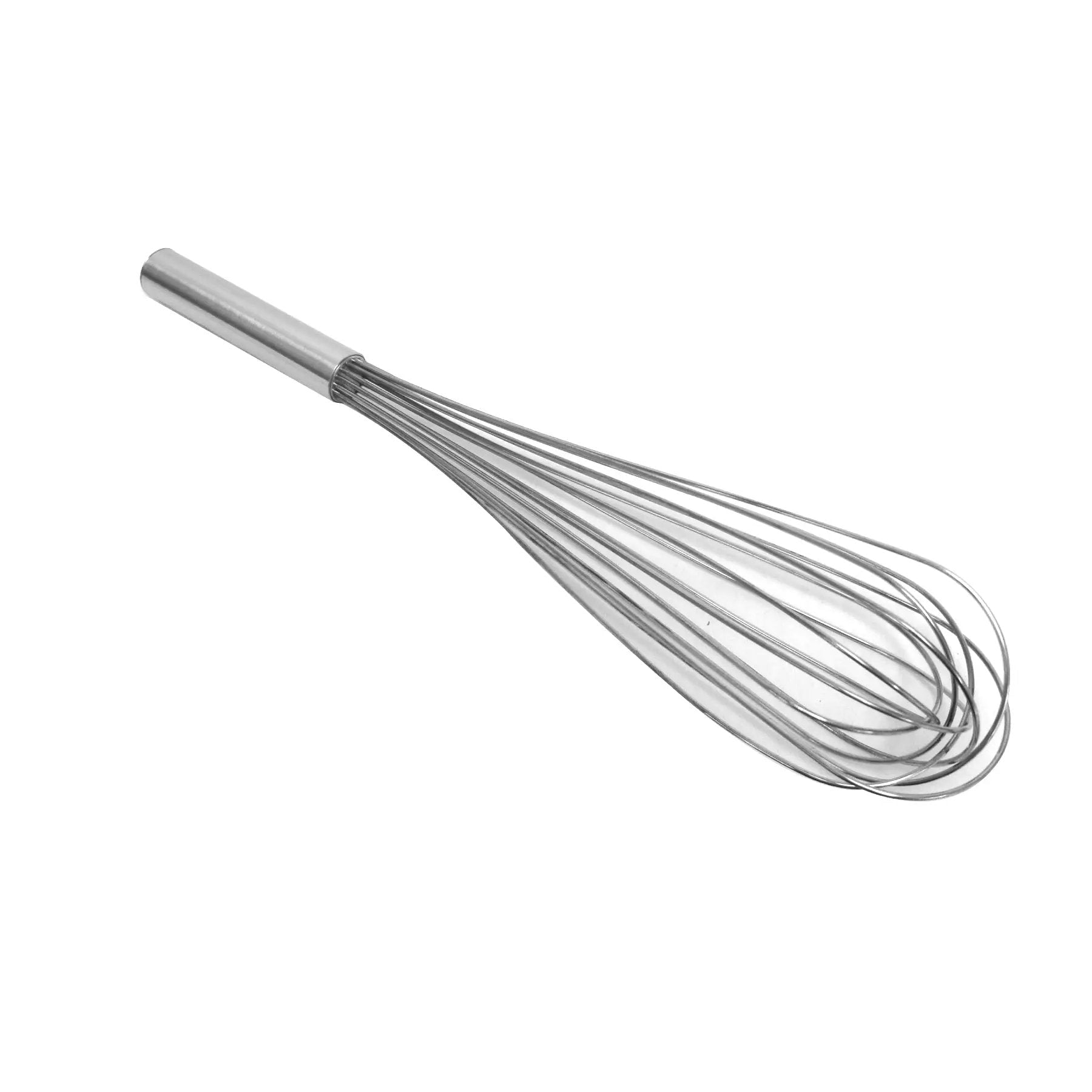
What Is a Piano Whip?
A piano whip (also called a piano whisk) is a whisk with a rounded, balloon-shaped wire profile made of thin, closely spaced wires. The name comes from the resemblance between the curved wires and piano strings. Compared to a French whip, a piano whip has thinner, more numerous wires arranged in a fuller round shape, which makes it especially good at incorporating air into liquids quickly.
That round shape is the key difference from other whisks. It hugs the curve of a mixing bowl or pot, so it covers more surface area per stroke than a narrower, elongated whisk.
What Is a Piano Whip Used For?
Piano whips are built for aeration and emulsification, meaning tasks where you need to whip air into a liquid or blend two ingredients that don't naturally combine (like oil and vinegar). Common restaurant uses include:
- Sauces: hollandaise, béchamel, beurre blanc, and other emulsified or cream-based sauces
- Custards and pastry cream: smoothing out lumps and incorporating air for lighter texture
- Whipped cream: fast aeration for dessert service
- Vinaigrettes and dressings: emulsifying oil into vinegar-based bases
- Eggs: beating whole eggs or egg whites for batters, meringues, and omelets
- Gravy and pan sauces: smoothing out roux-based sauces at the range
Piano Whip vs. French Whip: What's the Difference?
| Feature | Piano Whip | French Whip |
|---|---|---|
| Wire shape | Rounded, balloon-shaped | Narrow, elongated |
| Wire thickness | Thinner, more numerous wires | Thicker, fewer wires |
| Best for | Thin liquids, sauces, aeration, eggs | Heavier mixtures, batters, emulsifying dressings |
| Bowl coverage | Excellent in round bowls and pots | Better in deep, narrow vessels |
| Typical kitchen station | Sauce station, pastry | Line cooking, prep |
Restaurant Use Cases by Kitchen Station
| Kitchen Station | Common Use | Recommended Size |
|---|---|---|
| Sauce station | Hollandaise, beurre blanc, pan sauces | 12" to 14" |
| Pastry/dessert | Whipped cream, custards, meringue | 10" to 14" |
| Prep station | Vinaigrettes, marinades, batters | 12" to 16" |
| Line cooking (large batches) | Gravy, curry bases, large-pot sauces | 16" to 18" |
Choosing the Right Size
Match the whip length to your vessel, not just the task. A whip that's too short won't reach the bottom of a deep pot, and one that's too long is awkward in a small bowl.
| Size | Best For |
|---|---|
| 10" | Small bowls, single-serve sauces, dressings |
| 12" to 14" | Everyday line cooking and prep. This is the most commonly used range. |
| 16" to 18" | Deep pots, hotel pans, large-batch sauce or gravy production |
Piano Whip Options at Nishi Enterprise
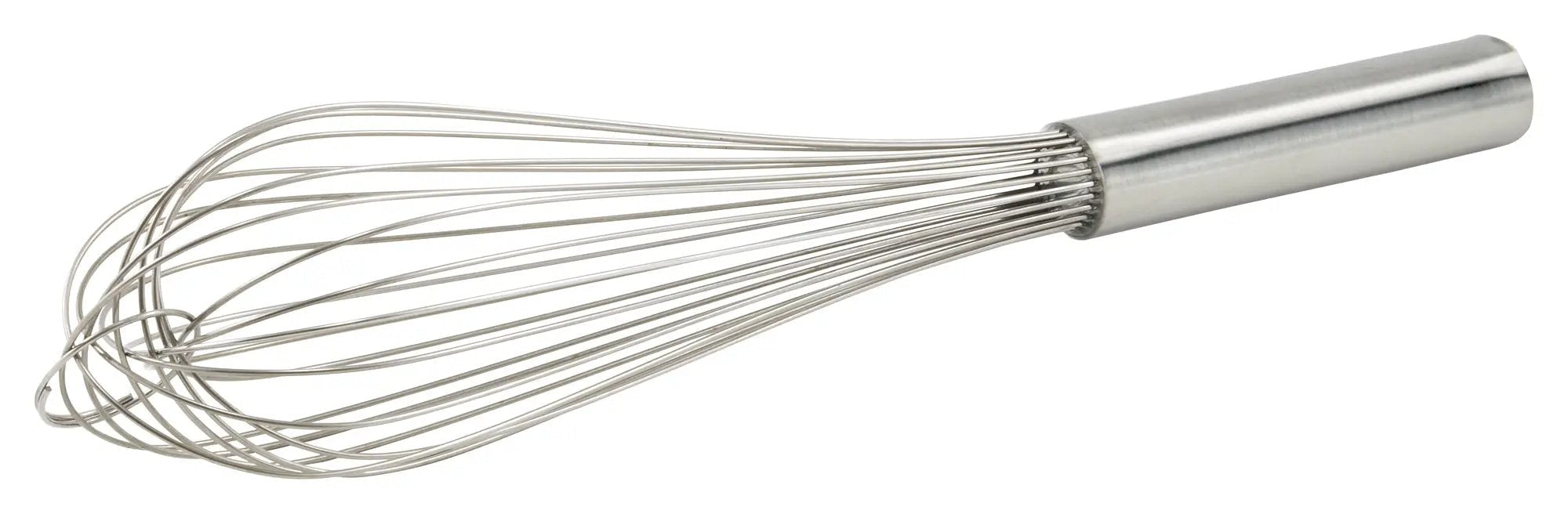
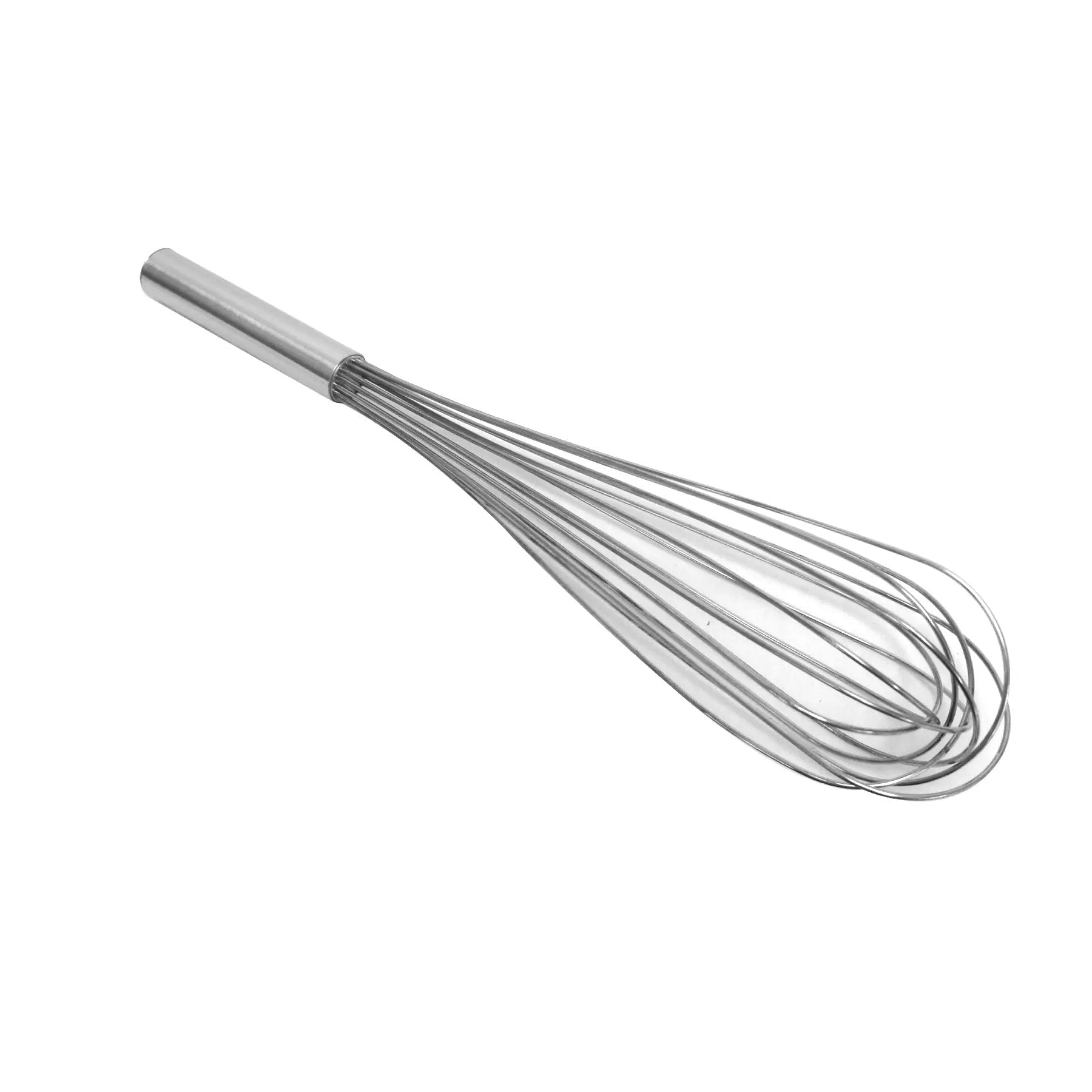
All of the whips below are in stock and ship from our warehouse. Winco whips use a stainless wire with a separate handle; Thunder Group whips are fully stainless steel, including the handle, for kitchens that want an all-metal, dishwasher-friendly tool.
| Brand | Size | SKU | Price | Link |
|---|---|---|---|---|
| Winco | 10" | PN-10 | $3.08 | View product |
| Winco | 12" | PN-12 | $3.46 | View product |
| Winco | 14" | PN-14 | $3.90 | View product |
| Winco | 16" | PN-16 | $4.19 | View product |
| Winco | 18" | PN-18 | $4.42 | View product |
| Thunder Group | 10" | SLWPP110 | $2.73 | View product |
| Thunder Group | 12" | SLWPP112 | $3.08 | View product |
| Thunder Group | 14" | SLWPP114 | $3.46 | View product |
| Thunder Group | 16" | SLWPP116 | $3.72 | View product |
| Thunder Group | 18" | SLWPP118 | $3.93 | View product |
Prices current as of July 2026. Check individual product pages for the latest pricing.
Winco vs. Thunder Group: Which Should You Buy?
| Feature | Winco (PN Series) | Thunder Group (SLWPP Series) |
|---|---|---|
| Handle material | Separate handle, stainless wire | Fully stainless steel, including handle |
| Price | Slightly higher across all sizes | Slightly lower across all sizes |
| Best for | Kitchens wanting a traditional whisk feel | Kitchens wanting one-piece, all-metal durability |
| Dishwasher safe | Yes | Yes |
Both lines cover the same five sizes (10" to 18") and are backed by the same in-stock availability, so the decision mostly comes down to handle preference and budget. Thunder Group runs slightly cheaper at every size.
Care Tips for Longer Life
- Hand wash or dishwasher clean after each use. Food residue left in the wires is harder to remove once dried.
- Avoid using piano whips on nonstick cookware, since the wires can scratch the coating over time.
- Store hanging or in a utensil crock rather than tossed in a drawer. Bent wires reduce aeration efficiency.
Frequently Asked Questions
What is a piano whip used for in a restaurant kitchen?
A piano whip is used to aerate and emulsify liquids. Common tasks include whipping cream, making hollandaise and other sauces, beating eggs, and blending vinaigrettes.
What size piano whip do most restaurants need?
Most restaurants use 12" to 14" piano whips for everyday line and prep work, with larger 16" to 18" whips reserved for big-batch sauces or deep pots.
Is a piano whip the same as a whisk?
Yes. "Piano whip" and "piano whisk" refer to the same tool, a whisk style named for its rounded, piano-string-like wire profile.
What's the difference between Winco and Thunder Group piano whips?
Winco piano whips use a stainless wire with a separate handle, while Thunder Group whips are fully stainless steel including the handle. Thunder Group is priced slightly lower at every matching size.
Nishi Enterprise stocks the full range of Winco and Thunder Group piano whips in sizes 10" to 18". Browse the full Piano Whip collection or pair with our mixing paddles and tongs to round out your kitchen's hand tools.


